Certified OSHA Training
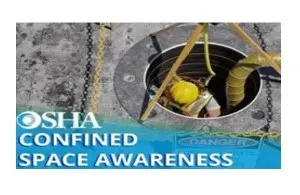
Confined Space Awareness
- OSHA-Authorized
- DOL-Aligned
$
$60.00$
What You’ll Learn?
Updated:
Confined Space Awareness
\
What You’ll Learn?
Course Details
Confined space awareness training prepares general industry and construction workers to recognize the hazards of permit-required and non-permit-required confined spaces before anyone attempts entry. This self-paced online confined space training explains how OSHA defines a confined space under 29 CFR 1910.146 and walks through the enclosed and partially enclosed environments workers encounter every day, from tanks and vessels to pits, vaults, and silos. A core focus of this confined space safety training is atmospheric hazards such as oxygen deficiency, flammable gases, and toxic vapors that make these spaces among the most dangerous on any worksite. Learners also study engulfment, entrapment, and the physical dangers that drive confined space fatalities each year. The course draws a clear line between awareness-level knowledge and the entry training required for authorized entrants, attendants, and supervisors, so workers understand why unauthorized entry is prohibited. Because the program is delivered entirely online, employees complete their confined space awareness training at their own pace from any device.
This OSHA-aligned confined space training supports employer compliance with 29 CFR 1910.146 by giving workers the hazard-recognition foundation the standard expects. When learners finish the course and pass the final assessment, they receive a certificate of completion documenting their confined space awareness training and 0.1 IACET CEU. As an IACET-accredited provider, The Training Institute issues continuing education units that are recorded on each learner's permanent transcript. Enroll now to equip your team with the confined space hazard awareness that keeps workers out of harm's way and your worksite inspection-ready.
Course Syllabus
Course Description
Pre-Course Information Sheet
Course: Confined Spaces Awareness Training (Online)
Course Overview
This course provides an introduction to confined spaces and the hazards associated with entry and work in permit-required and non-permit-required confined spaces.
The training focuses on hazard recognition, atmospheric dangers, entry procedures, and worker responsibilities to ensure safety in environments such as tanks, vessels, pits, vaults, and other enclosed or partially enclosed spaces.
This course aligns with OSHA confined space safety requirements under 29 CFR 1910.146 (General Industry) and applicable construction standards.
Delivery Method
Online / LMS-Based Asynchronous Learning
Participants may complete the course at their own pace within the allotted course access period.
Course Duration
1.0 Contact Hours
IACET CEUs Awarded
0.1 CEU
Technical Requirements
Participants:
- Reliable internet access
- Current web browser (Chrome, Edge, Firefox, or Safari)
- Audio capability for course videos and PowerPoint
- Ability to view PDF documents
- Access to the TTI Learning Management System (LMS)
Recommendation:
- Desktop or laptop computer for optimal learning experience
Criteria for Earning IACET
To receive 0.1 IACET CEU, participants must:
- Complete all required course modules
- Complete all learning activities
- Successfully complete required assessments
- Achieve a minimum passing score of 80% on course assessments
- Complete the course evaluation
Learner Support
Technical assistance is available for LMS access and navigation issues.
For support, contact:
Phone: (817) 769-6275
Email: [email protected]
Accessibility Statement
TTI is committed to providing an accessible learning environment. Course materials include accessibility features such as:
- Accessible digital content
- Adjustable screen viewing options where available
Learners requiring accommodation should contact TTI prior to beginning the course.
Important Completion Information
Participants are encouraged to complete the course within the assigned enrollment period. Progress is automatically tracked within the LMS.
Failure to complete all required activities and assessments will result in no CEU award being issued.
Acknowledgment
By beginning this course, participants acknowledge that they have reviewed and understand the course requirements, learning outcomes, participation expectations, and CEU award criteria.
What Will I Learn?
Upon successful completion of this course, participants will be able to:
- Define a confined space and identify permit-required confined spaces
- Recognize common hazards associated with confined spaces
- Understand atmospheric hazards including oxygen deficiency and toxic gases
- Describe general entry permit requirements and safety procedures
- Identify roles and responsibilities of entrants, attendants, and supervisors
- Understand emergency response limitations and rescue awareness
- Recognize the importance of atmospheric testing and ventilation.
Target Audience
This course is intended:
- Construction workers
- Maintenance personnel
- Utility workers
- Industrial facility employees
- Supervisors and safety personnel
- Any workers exposed to confined space environments
Total Course Duration
1 hour
Materials Included
Participants will have access to:
- Confined Spaces Awareness Training Modules
- Final Assessment
- Course Evaluation
Requirements / Instructions
There are no formal prerequisites for this course:
- No prior confined space certification required
- Basic workplace safety awareness recommended
Curriculum
2 modules · 1 hour
CBT Confined Space Awareness
Confined Space Awareness Training teaches workers to recognize confined spaces, understand the associated hazards (like toxic gases, oxygen deficiency, or engulfment), and know the basic safety procedures to stay safe, even if they are not authorized to enter them. The training ensures employees are familiar with relevant OSHA regulations, proper air monitoring, the use of permits, and the roles of different personnel involved in confined space operations.
- CBT Confined Space AwarenessLesson
- Confined Space AwarenessQuiz
Course Evaluation
\
- Course Review & CompletionLesson
Certificate of Completion
Meet Your Instructor
Lead HSE Instructor

The Training Institute is a team of seasoned field experts with decades of hands-on experience across electrical safety, OSHA compliance, confined-space training, and hazardous-materials response. Our instructors combine practical jobsite expertise with proven adult-learning methodology to deliver training that meets — and exceeds — federal and industry standards.
Student Review
(
0 Review)
Similar Courses

by
The Training Institute

by
The Training Institute

by
The Training Institute
Ready to get certified?
Enroll in Confined Space Awareness
Volume pricing for 5+ seats. Dedicated compliance support and audit-ready records.
Sign Up for Newsletter
Quick Links
Visit Us
1509 S. Dobson Street
Burleson, TX 76028
© 2026 The Training Institute. All rights reserved.
Course Materials
Preview the materials included with this course. Enrolled students can download all files.
- Confined Spaces Awareness TrainingSign in & enroll