Certified OSHA Training

Exit Routes, Emergency Action Plans (EAP), and Fire Prevention Plans (FPP) (Required by OSHA Annually)
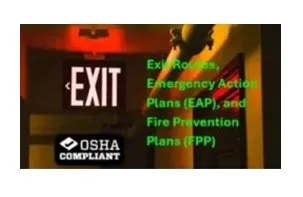
Exit Routes, Emergency Action Plans (EAP), and Fire Prevention Plans (FPP) (Required by OSHA Annually)
$25Self-paced online training
Enroll now
  • Self-paced online
  • Certificate included
  • 2 learners
Buy Exit Routes, Emergency Action Plans (EAP), and Fire Prevention Plans (FPP) (Required by OSHA Annually)

$

$25.00

$

Enrollment includes every lesson module, narrated video, a downloadable participant workbook keyed to 29 CFR 1910.36, 1910.37, 1910.38, and 1910.39, an emergency action plan template with all required elements prefilled, a fire prevention plan template, an exit route inspection checklist (width, illumination, signage, hardware, unobstructed condition), a signed drill record template to document the annual 29 CFR 1910.38(e) review for employees and the 1910.39(d) fire prevention plan review, a chain-of-command card for evacuation coordinators, an accountability procedure worksheet for employee roll call at the assembly area, a fire extinguisher monthly inspection log keyed to 29 CFR 1910.157, a fire watch duty log for hot-work operations, and scenario-based knowledge-check quizzes at the end of each module. Students also receive a regulatory quick-reference card listing the controlling section citations, a plain-language summary of the §1910.38 and §1910.39 employee training obligations, and a printable certificate of completion issued immediately after passing the final exam. The course player tracks progress automatically and allows learners to stop and resume on any device; technical support is available by email during business hours and our standard enrollment guarantee backs every purchase.The enrollment package adds an NFPA 101 Life Safety Code occupancy-classification crosswalk, a portable fire extinguisher monthly inspection log aligned to 29 CFR 1910.157(e)(2), an employee alarm system annual test record, and a fire drill critique form so coordinators can document lessons learned after each drill.

Level

All Levels

Level

Time to Complete

0 hour 0 minute

Lessons

2 Lessons

Language

English

Rating

(

0 Review

)

What You’ll Learn?

Updated:

May 4, 2026

Exit Routes, Emergency Action Plans (EAP), and Fire Prevention Plans (FPP) (Required by OSHA Annually)

2 Students

What You’ll Learn?

This Exit Routes, Emergency Action Plans, and Fire Prevention Plans course gives workers and supervisors a working command of the three OSHA standards that govern building evacuation and fire-safety planning: 29 CFR 1910.36 (design and construction requirements for exit routes), 29 CFR 1910.37 (maintenance, safeguards, and operational features for exit routes), 29 CFR 1910.38 (emergency action plans), and 29 CFR 1910.39 (fire prevention plans). Learners build competency in the physical requirements for exit routes — separation from the workplace, construction of fire-resistive materials, unobstructed width, illumination, signage, and door swing direction — and the operational requirements including the prohibition on locked or blocked exits, the rule that at least two exit routes must be available unless the number of employees, size of the building, and arrangement of the workplace permit safe evacuation from one route, and the rules for temporary outages of exit route lighting. The EAP module walks through each required element of 29 CFR 1910.38(c): procedures for reporting a fire or other emergency, procedures for emergency evacuation including type of evacuation and exit route assignments, procedures for employees who remain to operate critical plant operations before evacuation, procedures to account for all employees after evacuation, procedures for employees performing rescue or medical duties, and the name or title of each employee who may be contacted. The FPP module covers the 29 CFR 1910.39(c) elements including a list of major workplace fire hazards, proper handling and storage procedures, potential ignition sources and their control, the type of fire protection equipment provided, names or job titles of personnel responsible for equipment maintenance, and personnel responsible for fuel-source-hazard control.Related standards covered include 29 CFR 1910.157 portable fire extinguishers, 29 CFR 1910.160 fixed fire suppression systems, 29 CFR 1910.165 employee alarm systems, and 29 CFR 1910.35 compliance with NFPA 101 Life Safety Code as an alternate means of compliance with exit-route design requirements.

The Exit Routes, Emergency Action Plans (EAP), and Fire Prevention Plans (FPP) (Required by OSHA Annually) course is a self-paced, OSHA-aligned online training program from The Training Institute. Exit Routes, Emergency Action Plans (EAP), and Fire Prevention Plans (FPP) (Required by OSHA Annually) delivers in-depth instruction, a final assessment, and a printable certificate of completion the moment you pass.

About the Exit Routes, Emergency Action Plans (EAP), and Fire Prevention Plans (FPP) (Required by OSHA Annually) Course

Enrollment includes every lesson module, narrated video, a downloadable participant workbook keyed to 29 CFR 1910.36, 1910.37, 1910.38, and 1910.39, an emergency action plan template with all required elements prefilled, a fire prevention plan template, an exit route inspection checklist (width, illumination, signage, hardware, unobstructed condition), a signed drill record template to document the annual 29 CFR 1910.38(e) review for employees and the 1910.39(d) fire prevention plan review, a chain-of-command card for evacuation coordinators, an accountability procedure worksheet for employee roll call at the assembly area, a fire extinguisher monthly inspection log keyed to 29 CFR 1910.157, a fire watch duty log for hot-work operations, and scenario-based knowledge-check quizzes at the end of each module. Students also receive a regulatory quick-reference card listing the controlling section citations, a plain-language summary of the §1910.38 and §1910.39 employee training obligations, and a printable certificate of completion issued immediately after passing the final exam. The course player tracks progress automatically and allows learners to stop and resume on any device; technical support is available by email during business hours and our standard enrollment guarantee backs every purchase.The enrollment package adds an NFPA 101 Life Safety Code occupancy-classification crosswalk, a portable fire extinguisher monthly inspection log aligned to 29 CFR 1910.157(e)(2), an employee alarm system annual test record, and a fire drill critique form so coordinators can document lessons learned after each drill.

What You Will Learn in Exit Routes, Emergency Action Plans (EAP), and Fire Prevention Plans (FPP) (Required by OSHA Annually)

This Exit Routes, Emergency Action Plans, and Fire Prevention Plans course gives workers and supervisors a working command of the three OSHA standards that govern building evacuation and fire-safety planning: 29 CFR 1910.36 (design and construction requirements for exit routes), 29 CFR 1910.37 (maintenance, safeguards, and operational features for exit routes), 29 CFR 1910.38 (emergency action plans), and 29 CFR 1910.39 (fire prevention plans). Learners build competency in the physical requirements for exit routes — separation from the workplace, construction of fire-resistive materials, unobstructed width, illumination, signage, and door swing direction — and the operational requirements including the prohibition on locked or blocked exits, the rule that at least two exit routes must be available unless the number of employees, size of the building, and arrangement of the workplace permit safe evacuation from one route, and the rules for temporary outages of exit route lighting. The EAP module walks through each required element of 29 CFR 1910.38(c): procedures for reporting a fire or other emergency, procedures for emergency evacuation including type of evacuation and exit route assignments, procedures for employees who remain to operate critical plant operations before evacuation, procedures to account for all employees after evacuation, procedures for employees performing rescue or medical duties, and the name or title of each employee who may be contacted. The FPP module covers the 29 CFR 1910.39(c) elements including a list of major workplace fire hazards, proper handling and storage procedures, potential ignition sources and their control, the type of fire protection equipment provided, names or job titles of personnel responsible for equipment maintenance, and personnel responsible for fuel-source-hazard control.Related standards covered include 29 CFR 1910.157 portable fire extinguishers, 29 CFR 1910.160 fixed fire suppression systems, 29 CFR 1910.165 employee alarm systems, and 29 CFR 1910.35 compliance with NFPA 101 Life Safety Code as an alternate means of compliance with exit-route design requirements.

Who Should Take Exit Routes, Emergency Action Plans (EAP), and Fire Prevention Plans (FPP) (Required by OSHA Annually)

The course is designed for employees and supervisors in every industry subject to OSHA general industry rules, including office workers, retail and hospitality staff, healthcare workers outside the Joint Commission scope, warehouse and distribution-center personnel, manufacturing-floor operators, food-processing workers, laboratory staff, building maintenance teams, janitorial staff, and facility managers. It is equally appropriate for designated emergency coordinators, floor wardens, evacuation route captains, fire wardens, safety committee members, human-resources managers who build onboarding curricula, property and facility managers overseeing multi-tenant commercial buildings, and EHS professionals who audit compliance with 29 CFR 1910.38 and 1910.39. The course is particularly valuable for small-business owners who must draft and implement an emergency action plan for the first time, and for corporate EHS teams standardizing EAPs and FPPs across a multi-site portfolio. Architects and interior designers benefit from the exit-route design requirements, while insurance loss-control specialists evaluating fire risk and commercial real estate brokers advising tenants on lease-build safety obligations use the modules as reference material. Joint-employer arrangements with temporary staffing agencies also rely on the course to document that leased employees receive the same emergency training as direct hires.Joint Commission-accredited healthcare facilities managing Life Safety Code EC.02.03.01 compliance, university campus safety offices, K-12 facility managers coordinating annual fire drills, and multi-tenant office-building property managers also rely on the EAP/FPP framework.

Prerequisites

No prerequisite credential is required to enroll. Learners should have basic familiarity with their facility layout, including the approximate locations of marked exits, fire extinguishers, and fire alarm pull stations. A copy of the current written EAP and Fire Prevention Plan should be available during the course so the learner can complete the review exercises against their own employer documents.

A modern browser, reliable internet connection, and a device with audio are the only technical requirements. Learners who plan to lead facility walk-throughs after the course should also bring a tape measure, flashlight, and a printed floor plan to mark exit-route obstructions, blocked exit discharge points, and illumination deficiencies.

Course Details

Price: $25.00. Browse our full course catalog for more options.

Your Instructor

The Training Institute — Training Institute Instructor Team

The Training Institute is a team of seasoned field experts with decades of hands-on experience across electrical safety, OSHA compliance, confined-space training, and hazardous-materials response. Our instructors combine practical jobsite expertise with proven adult-learning methodology to deliver training that meets — and exceeds — federal and industry standards.

Certificate of Completion

Upon successful completion of this training program, participants receive an official certificate of completion from The Training Institute.

Curriculum

  • Exit Routes, Emergency Action Plans (EAP), and Fire Prevention Plans (FPP)
    • Exit Routes, Emergency Action Plans (EAP), and Fire Prevention Plans (FPP)
    • Exit Routes, Emergency Action, and Fire Prevention Plans Exam
  • Course Evaluation
    • Course Review & Completion

Standards & Compliance for Exit Routes, Emergency Action Plans (EAP), and Fire Prevention Plans (FPP) (Required by OSHA Annually)

Exit Routes, Emergency Action Plans (EAP), and Fire Prevention Plans (FPP) (Required by OSHA Annually) aligns with current OSHA outreach training program guidance and is reviewed regularly against the latest federal standards. Learners completing Exit Routes, Emergency Action Plans (EAP), and Fire Prevention Plans (FPP) (Required by OSHA Annually) receive a printable certificate they can submit to employers as documented evidence of safety training, and may purchase additional Training Institute courses to satisfy related annual requirements.

What Will I Learn?

This Exit Routes, Emergency Action Plans, and Fire Prevention Plans course gives workers and supervisors a working command of the three OSHA standards that govern building evacuation and fire-safety planning: 29 CFR 1910.36 (design and construction requirements for exit routes), 29 CFR 1910.37 (maintenance, safeguards, and operational features for exit routes), 29 CFR 1910.38 (emergency action plans), and 29 CFR 1910.39 (fire prevention plans). Learners build competency in the physical requirements for exit routes — separation from the workplace, construction of fire-resistive materials, unobstructed width, illumination, signage, and door swing direction — and the operational requirements including the prohibition on locked or blocked exits, the rule that at least two exit routes must be available unless the number of employees, size of the building, and arrangement of the workplace permit safe evacuation from one route, and the rules for temporary outages of exit route lighting. The EAP module walks through each required element of 29 CFR 1910.38(c): procedures for reporting a fire or other emergency, procedures for emergency evacuation including type of evacuation and exit route assignments, procedures for employees who remain to operate critical plant operations before evacuation, procedures to account for all employees after evacuation, procedures for employees performing rescue or medical duties, and the name or title of each employee who may be contacted. The FPP module covers the 29 CFR 1910.39(c) elements including a list of major workplace fire hazards, proper handling and storage procedures, potential ignition sources and their control, the type of fire protection equipment provided, names or job titles of personnel responsible for equipment maintenance, and personnel responsible for fuel-source-hazard control.Related standards covered include 29 CFR 1910.157 portable fire extinguishers, 29 CFR 1910.160 fixed fire suppression systems, 29 CFR 1910.165 employee alarm systems, and 29 CFR 1910.35 compliance with NFPA 101 Life Safety Code as an alternate means of compliance with exit-route design requirements.

Target Audience

The course is designed for employees and supervisors in every industry subject to OSHA general industry rules, including office workers, retail and hospitality staff, healthcare workers outside the Joint Commission scope, warehouse and distribution-center personnel, manufacturing-floor operators, food-processing workers, laboratory staff, building maintenance teams, janitorial staff, and facility managers. It is equally appropriate for designated emergency coordinators, floor wardens, evacuation route captains, fire wardens, safety committee members, human-resources managers who build onboarding curricula, property and facility managers overseeing multi-tenant commercial buildings, and EHS professionals who audit compliance with 29 CFR 1910.38 and 1910.39. The course is particularly valuable for small-business owners who must draft and implement an emergency action plan for the first time, and for corporate EHS teams standardizing EAPs and FPPs across a multi-site portfolio. Architects and interior designers benefit from the exit-route design requirements, while insurance loss-control specialists evaluating fire risk and commercial real estate brokers advising tenants on lease-build safety obligations use the modules as reference material. Joint-employer arrangements with temporary staffing agencies also rely on the course to document that leased employees receive the same emergency training as direct hires.Joint Commission-accredited healthcare facilities managing Life Safety Code EC.02.03.01 compliance, university campus safety offices, K-12 facility managers coordinating annual fire drills, and multi-tenant office-building property managers also rely on the EAP/FPP framework.

Materials Included

Enrollment includes every lesson module, narrated video, a downloadable participant workbook keyed to 29 CFR 1910.36, 1910.37, 1910.38, and 1910.39, an emergency action plan template with all required elements prefilled, a fire prevention plan template, an exit route inspection checklist (width, illumination, signage, hardware, unobstructed condition), a signed drill record template to document the annual 29 CFR 1910.38(e) review for employees and the 1910.39(d) fire prevention plan review, a chain-of-command card for evacuation coordinators, an accountability procedure worksheet for employee roll call at the assembly area, a fire extinguisher monthly inspection log keyed to 29 CFR 1910.157, a fire watch duty log for hot-work operations, and scenario-based knowledge-check quizzes at the end of each module. Students also receive a regulatory quick-reference card listing the controlling section citations, a plain-language summary of the §1910.38 and §1910.39 employee training obligations, and a printable certificate of completion issued immediately after passing the final exam. The course player tracks progress automatically and allows learners to stop and resume on any device; technical support is available by email during business hours and our standard enrollment guarantee backs every purchase.The enrollment package adds an NFPA 101 Life Safety Code occupancy-classification crosswalk, a portable fire extinguisher monthly inspection log aligned to 29 CFR 1910.157(e)(2), an employee alarm system annual test record, and a fire drill critique form so coordinators can document lessons learned after each drill.

Requirements / Instructions

No prerequisite credential is required to enroll. Learners should have basic familiarity with their facility layout, including the approximate locations of marked exits, fire extinguishers, and fire alarm pull stations. A copy of the current written EAP and Fire Prevention Plan should be available during the course so the learner can complete the review exercises against their own employer documents.

A modern browser, reliable internet connection, and a device with audio are the only technical requirements. Learners who plan to lead facility walk-throughs after the course should also bring a tape measure, flashlight, and a printed floor plan to mark exit-route obstructions, blocked exit discharge points, and illumination deficiencies.

Curriculum

2 modules

Exit Routes, Emergency Action Plans (EAP), and Fire Prevention Plans (FPP)

1 Lesson 1 Quiz
  • Exit Routes, Emergency Action Plans (EAP), and Fire Prevention Plans (FPP)Lesson
  • Exit Routes, Emergency Action, and Fire Prevention Plans ExamQuiz

Course Evaluation

1 Lesson 0 Quiz
  • Course Review & CompletionLesson

Certificate of Completion 

Upon successful completion of this training program  participants will receive a certificate of completion.    

Meet Your Instructor

The Training Institute
MSGSPCSHO-C&G

Lead HSE Instructor

The Training Institute

The Training Institute is a team of seasoned field experts with decades of hands-on experience across electrical safety, OSHA compliance, confined-space training, and hazardous-materials response. Our instructors combine practical jobsite expertise with proven adult-learning methodology to deliver training that meets — and exceeds — federal and industry standards.

Student Review

0

(

0 Review

)

5 stars
0 Rating
4 stars
0 Rating
3 stars
0 Rating
2 stars
0 Rating
1 star
0 Rating

Similar Courses

Buy Basic Hoist and Crane Safey
0

by

The Training Institute

$75.00
Buy NFPA70E Qualified Electrical Worker
0

by

The Training Institute

$300.00
Buy Pipeline Construction 101
0

by

The Training Institute

$100.00
$25.00

Enrollment includes every lesson module, narrated video, a downloadable participant workbook keyed to 29 CFR 1910.36, 1910.37, 1910.38, and 1910.39, an emergency action plan template with all required elements prefilled, a fire prevention plan template, an exit route inspection checklist (width, illumination, signage, hardware, unobstructed condition), a signed drill record template to document the annual 29 CFR 1910.38(e) review for employees and the 1910.39(d) fire prevention plan review, a chain-of-command card for evacuation coordinators, an accountability procedure worksheet for employee roll call at the assembly area, a fire extinguisher monthly inspection log keyed to 29 CFR 1910.157, a fire watch duty log for hot-work operations, and scenario-based knowledge-check quizzes at the end of each module. Students also receive a regulatory quick-reference card listing the controlling section citations, a plain-language summary of the §1910.38 and §1910.39 employee training obligations, and a printable certificate of completion issued immediately after passing the final exam. The course player tracks progress automatically and allows learners to stop and resume on any device; technical support is available by email during business hours and our standard enrollment guarantee backs every purchase.The enrollment package adds an NFPA 101 Life Safety Code occupancy-classification crosswalk, a portable fire extinguisher monthly inspection log aligned to 29 CFR 1910.157(e)(2), an employee alarm system annual test record, and a fire drill critique form so coordinators can document lessons learned after each drill.

Level

All Levels

Time to Complete

0 hour 0 minute

Lessons

2 Lessons

Language

English

Rating

(

0 Review

)

0

Ready to get certified?

Enroll in Exit Routes, Emergency Action Plans (EAP), and Fire Prevention Plans (FPP) (Required by OSHA Annually)

Volume pricing for 5+ seats. Dedicated compliance support and audit-ready records.