Certified OSHA Training
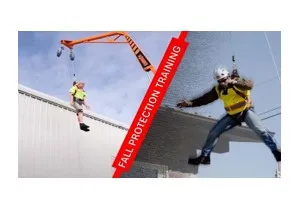
Fall Protection Training
- OSHA-Authorized
- DOL-Aligned
$
$75.00$
What You’ll Learn?
Updated:
Fall Protection Training
\
What You’ll Learn?
Course Details
This self-paced online Fall Protection Training helps workers recognize fall hazards and apply effective fall protection measures on the job. Delivered entirely through the TTI Learning Management System as asynchronous, LMS-based coursework, the program can be completed at your own pace within the course access period. Grounded in OSHA fall protection requirements, including construction standards under 29 CFR 1926 Subpart M and general industry rules under 29 CFR 1910, the training covers hazard identification, fall prevention, and the difference between prevention and protection. Learners study fall protection systems, guardrails, and the components and proper use of personal fall arrest systems (PFAS), along with equipment inspection for damage and serviceability. The course also addresses ladder, scaffold, and elevated work platform safety, fall clearance calculations, and emergency response and rescue planning for anyone working at heights. Practical scenarios reinforce how to select the right fall protection systems based on real workplace conditions.
Designed for construction workers, general industry employees, supervisors, safety professionals, and contractors, the course requires no formal prerequisites beyond the ability to follow written and verbal instruction and a basic understanding of workplace safety. Participants complete interactive fall protection modules and a final assessment, earning a certificate of completion and 0.2 IACET CEU after achieving the minimum passing score of 80%. This certificate documents training completion and is not a professional license or an OSHA card. Enroll today to build the fall protection knowledge that helps reduce fall-related injuries and supports a safer workplace.
Course Syllabus
Course Description
Pre-Course Information Sheet
Course: Fall Protection (Online)
Course Overview
This course provides participants with the knowledge and skills necessary to recognize fall hazards and implement effective fall protection measures. Training addresses applicable regulatory requirements, hazard identification, fall prevention and protection systems, equipment inspection, proper use of personal fall arrest systems (PFAS), rescue considerations, and employee responsibilities.
The course is designed to help employees reduce the risk of fall-related injuries and fatalities while supporting compliance with workplace safety regulations.
Delivery Method
Online / LMS-Based Asynchronous Learning
Participants may complete the course at their own pace within the allotted course access period.
Course Duration
2 Contact Hours
IACET CEUs Awarded
0.2 CEU
Technical Requirements
Participants must have:
- Reliable internet access
- Current web browser (Chrome, Edge, Firefox, or Safari)
- Audio capability for course videos and PowerPoint
- Ability to view PDF documents
- Access to the TTI Learning Management System (LMS)
Recommendation:
- Desktop or laptop computer for optimal learning experience
Criteria for Earning IACET
To receive 0.2 IACET CEU, participants must:
- Complete all required course modules
- Complete all learning activities
- Successfully complete required assessments
- Achieving a minimum passing score of 80% on course assessments
- Complete the course evaluation
Learner Support
Technical assistance is available for LMS access and navigation issues.
For support, contact:
Phone: (817) 769-6275
Email: [email protected]
Accessibility Statement
TTI is committed to providing an accessible learning environment. Course materials include accessibility features such as:
- Accessible digital content
- Adjustable screen viewing options where available
Learners requiring accommodation should contact TTI prior to beginning the course.
Important Completion Information
Participants are encouraged to complete the course within the assigned enrollment period. Progress is automatically tracked within the LMS.
Failure to complete all required activities and assessments will result in no CEU award being issued.
Acknowledgment
By beginning this course, participants acknowledge that they have reviewed and understand the course requirements, learning outcomes, participation expectations, and CEU award criteria.
What Will I Learn?
By the end of the course, participants will be able to:
- Define fall hazards and explain the importance of fall protection.
- Identify applicable OSHA fall protection requirements.
- Recognize common workplace situations that present fall hazards.
- Differentiate between fall prevention and fall protection methods.
- Identify the components of a personal fall arrest system (PFAS).
- Select appropriate fall protection systems based on workplace conditions.
- Inspect fall protection equipment for damage and serviceability.
- Calculate and evaluate fall clearance requirements.
- Describe ladder, scaffold, and elevated work platform safety considerations.
- Explain emergency response and rescue planning requirements associated with fall protection.
Target Audience
This course is intended for:
- Construction workers,
- Maintenance personnel,
- General Industry employees,
- Supervisors,
- Safety professionals,
- Contractors,
- Employees exposed to fall hazards.
Total Course Duration
2 hours
Materials Included
Participants will have access to:
- Fall Protection Modules
- Final Assessment
- Course Evaluation
Requirements / Instructions
There are no formal prerequisites for this course.
Participants:
- Be able to understand written and verbal instruction in the language of delivery.
- Have a basic understanding of workplace safety practices.
Curriculum
2 modules · 2 hours
Fall Protection Training
Fall protection training is a specialized program designed to equip workers with the knowledge and skills to prevent and respond to falls, covering topics like hazard identification, the proper use and inspection of equipment like harnesses and guardrails, and emergency procedures. The training is crucial for anyone working at heights and includes both theoretical knowledge and hands-on practice, with the goal of reducing workplace injuries and fatalities by ensuring workers can effectively use fall protection systems.
- Fall Protection TrainingLesson
- Fall Protection Training ExamQuiz
Course Evaluation
\
- Course Review & CompletionLesson
Certificate of Completion
Meet Your Instructor
Lead HSE Instructor

The Training Institute is a team of seasoned field experts with decades of hands-on experience across electrical safety, OSHA compliance, confined-space training, and hazardous-materials response. Our instructors combine practical jobsite expertise with proven adult-learning methodology to deliver training that meets — and exceeds — federal and industry standards.
Student Review
(
0 Review)
Similar Courses

by
The Training Institute

by
The Training Institute

by
The Training Institute
Ready to get certified?
Enroll in Fall Protection Training
Volume pricing for 5+ seats. Dedicated compliance support and audit-ready records.
Sign Up for Newsletter
Quick Links
Visit Us
1509 S. Dobson Street
Burleson, TX 76028
© 2026 The Training Institute. All rights reserved.
Course Materials
Preview the materials included with this course. Enrolled students can download all files.
- Fall ProtectionSign in & enroll