Certified OSHA Training
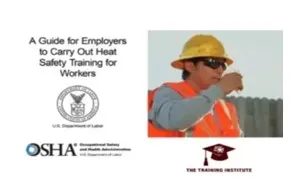
OSHA Heat Stress Awareness and Prevention Training
- OSHA-Authorized
- DOL-Aligned
$
$35.00$
What You’ll Learn?
Updated:
OSHA Heat Stress Awareness and Prevention Training
\
What You’ll Learn?
Course Details
The OSHA Heat Stress Awareness and Prevention Training is a self-paced online course that prepares workers and supervisors to recognize, avoid, and respond to the dangers of working in hot environments. This heat stress training explains how the body reacts to heat and why heat illness prevention is essential on outdoor job sites, in warehouses, and in other hot indoor workplaces where high temperatures build up. Delivered through self-paced online modules you can complete on your own schedule, the course builds practical heat stress awareness so employees can protect themselves and their coworkers. You will learn to identify the early signs of heat illness and understand how conditions can progress from heat cramps to heat exhaustion and, in the most serious cases, life-threatening heat stroke. The training also covers the core practices behind workplace heat safety, including hydration, rest breaks, shade, and gradual acclimatization to hot conditions. Employers turn to courses like this to meet their duty to protect workers from recognized hazards and to reinforce a lasting culture of heat stress prevention.
By the end of this OSHA heat safety course, participants will be able to recognize the symptoms of heat-related illness, take immediate action when a coworker is affected, and apply prevention measures on the job every day. The material reflects OSHA's long-standing guidance that heat hazards be controlled through water, rest, and shade, along with training and planning for high-heat days. Because the entire program is delivered online, you can start immediately and finish from anywhere with an internet connection, without traveling to a classroom. Enroll below to complete your heat stress awareness and prevention training and help build a safer, heat-ready workplace.
Course Syllabus
Course Description
Pre-Course Information Sheet
Course: Heat Stress Awareness and Prevention (Online)
Course Overview
This course provides participants with the knowledge and skills necessary to recognize hazardous energy sources and apply lockout/tagout (LOTO) procedures to protect employees during servicing and maintenance activities. The training addresses regulatory requirements, energy isolation methods, verification procedures, and employer/employee responsibilities.
Delivery Method
Online / LMS-Based Asynchronous Learning
Participants may complete the course at their own pace within the allotted course access period.
Course Duration
2 Contact Hours
IACET CEUs Awarded
0.2 CEU
Target Audience
This course is intended for:
- Maintenance personnel
- Machine operators
- Production employees
- Supervisors and managers
- Safety professionals
- Authorized and affected employees.
Learning Outcomes
By the end of the course, participants will be able to:
- Define hazardous energy and identify common energy sources.
- Explain the purpose and requirements of lockout/tagout programs.
- Distinguish between authorized, affected, and other employees.
- Identify components of an effective energy control procedure.
- Demonstrate the proper sequence for shutting down, isolating, locking/tagging, and verifying equipment.
- Describe group lockout procedures and shift-change considerations.
- Recognize common LOTO violations and associated risks.
- Apply lockout/tagout principles to workplace scenarios.
Prerequisites
There are no formal prerequisites for this course.
- Be at least 18 years of age (if required by employer policy)
- Have a basic understanding of workplace safety practices
- Be able to read and understand safety instructions in English (or language of instruction)
No prior LOTO training is required unless designated as a refresher or advanced course.
Technical Requirements
Participants:
- Reliable internet access
- Current web browser (Chrome, Edge, Firefox, or Safari)
- Audio capability for course videos and PowerPoint
- Ability to view PDF documents
- Access to the TTI Learning Management System (LMS)
Recommendation:
- Desktop or laptop computer for optimal learning experience
Criteria for Earning IACET
To receive 0.2 IACET CEU, participants must:
- Complete all required course modules
- Complete all learning activities
- Successfully complete required assessments
- Achieving a minimum passing score of 80% on course assessments
- Complete the course evaluation
Learner Support
Technical assistance is available for LMS access and navigation issues.
For support, contact:
Phone: (817) 769-6275
Email: [email protected]
Accessibility Statement
TTI is committed to providing an accessible learning environment. Course materials include accessibility features such as:
- Accessible digital content
- Adjustable screen viewing options where available
Learners requiring accommodation should contact TTI prior to beginning the course.
Important Completion Information
Participants are encouraged to complete the course within the assigned enrollment period. Progress is automatically tracked within the LMS.
Failure to complete all required activities and assessments will result in no CEU award being issued.
Acknowledgment
By beginning this course, participants acknowledge that they have reviewed and understand the course requirements, learning outcomes, participation expectations, and CEU award criteria.
What Will I Learn?
This OSHA Heat Stress Awareness and Prevention course prepares outdoor and indoor workers, supervisors, and EHS staff to recognize, prevent, and respond to heat-related illnesses under the OSHA General Duty Clause and the National Emphasis Program on Outdoor and Indoor Heat-Related Hazards. Participants learn the physiology of thermoregulation, heat balance, core versus skin temperature, and how dehydration, age, medications, acclimatization, and personal protective equipment affect an individual worker heat tolerance. The course differentiates heat rash, heat cramps, heat syncope, heat exhaustion, and heat stroke, and walks through the specific first-aid response for each, including when to activate EMS, how to cool a collapsed worker rapidly with cold water immersion or wet towels with fans, and how to avoid fatal delays. Learners study NIOSH criteria for recommended heat stress thresholds using WBGT, measure WBGT with wet bulb globe thermometers, and interpret ACGIH TLV tables for work and rest schedules. The program emphasizes acclimatization protocols such as the NIOSH 20 percent rule for new or returning workers, hydration scheduling of roughly one cup every 15 to 20 minutes, access to shade, buddy checks, rest breaks, and engineering controls including ventilation, cooling fans, cooling vests, and reflective barriers. Participants practice writing a site-specific heat illness prevention plan, conducting daily heat briefings, and integrating weather forecasts and heat index triggers into job planning.
Target Audience
This course is intended for:
- Outdoor workers exposed to environmental heat (construction, agriculture, landscaping, roadwork, and utilities)
- Indoor workers in hot environments (foundries, bakeries, warehouses, commercial kitchens, and laundries)
- Supervisors and managers responsible for worker safety in hot conditions
- Safety professionals and EHS staff developing or administering a heat illness prevention plan
- Workers new to or returning to high-heat conditions who require acclimatization
- First-aid providers and emergency responders
Total Course Duration
2 hours
Materials Included
Participants will have access to:
- Heat Stress Awareness and Prevention Modules
- Final Assessment
- Course Evaluation
Requirements / Instructions
There are no formal prerequisites for this course.
- Be at least 18 years of age (if required by employer policy)
- Have a basic understanding of workplace safety practices
- Be able to read and understand safety instructions in English (or the language of instruction)
No prior heat illness prevention training is required unless designated as a refresher or advanced course.
Curriculum
2 modules · 2 hours
OSHA Heat Stress Awareness and Prevention
OSHA's Heat Illness Prevention Campaign emphasizes that heat-related illnesses are preventable and provides resources for employers and workers to implement strategies like Water, Rest, and Shade, acclimatization programs, hazard assessments, and regular monitoring of workers and weather conditions. Key prevention steps include workers drinking water frequently, taking breaks in cool, shaded areas, and wearing appropriate light-colored, loose-fitting clothing. Employers must provide training, engineering controls like ventilation, and work practices that reduce exertion.
- OSHA Heat Stress Awareness and PreventionLesson
- Heat Stress Awareness and Prevention Final ExamQuiz
Course Evaluation
\
- Course Review & CompletionLesson
Certificate of Completion
Meet Your Instructor
Lead HSE Instructor

The Training Institute is a team of seasoned field experts with decades of hands-on experience across electrical safety, OSHA compliance, confined-space training, and hazardous-materials response. Our instructors combine practical jobsite expertise with proven adult-learning methodology to deliver training that meets — and exceeds — federal and industry standards.
Student Review
(
0 Review)
Similar Courses

by
The Training Institute

by
The Training Institute

by
The Training Institute
Ready to get certified?
Enroll in OSHA Heat Stress Awareness and Prevention Training
Volume pricing for 5+ seats. Dedicated compliance support and audit-ready records.
Sign Up for Newsletter
Quick Links
Visit Us
1509 S. Dobson Street
Burleson, TX 76028
© 2026 The Training Institute. All rights reserved.
Course Materials
Preview the materials included with this course. Enrolled students can download all files.
- Heat Stress Awareness and PreventionSign in & enroll