Certified OSHA Training
Respirable Crystalline Silica
- OSHA-Authorized
- DOL-Aligned
$
$35.00$
What You’ll Learn?
Updated:
Respirable Crystalline Silica
\
What You’ll Learn?
Course Details
51 - The Training Institute's Respirable Crystalline Silica course explains the health hazards of the silica dust generated when workers cut, grind, drill, or handle concrete, stone, masonry, and other silica-containing materials. Delivered as a self-paced online program, this silica awareness training helps construction and general industry workers recognize the tasks and processes that release respirable crystalline silica into the air. Participants learn how prolonged silica exposure can lead to silicosis, lung cancer, and other serious silica-related diseases. The curriculum reviews occupational exposure limits, the OSHA permissible exposure limit (PEL), and the regulatory requirements employers must meet to protect their workforce. It also covers exposure assessment methods and the hierarchy of controls used to reduce airborne dust at the source. Learners explore engineering controls such as wet methods and local exhaust ventilation, along with safe work practices and respiratory protection.
The course also addresses hazard communication, including how to interpret labels and Safety Data Sheets (SDSs) for silica-containing products. Employer and employee responsibilities are outlined, along with the core elements of a silica exposure control plan, so every participant understands their role in keeping the workplace safe. Upon completion of this one-hour program, learners earn a certificate of completion and 0.1 IACET CEU. Enroll today to build the silica safety knowledge needed to work confidently and reduce the risk of harmful dust exposure.
Course Syllabus
Course Description
Pre-Course Information Sheet
Course: Respirable Crystalline Silica (Online)
Course Overview
This course provides participants with an understanding of the hazards associated with respirable crystalline silica and the measures necessary to prevent or minimize exposure. Participants will learn about silica-containing materials, health effects of exposure, exposure assessment methods, regulatory requirements, engineering controls, work practices, respiratory protection, and employer and employee responsibilities.
The course emphasizes practical exposure prevention strategies and compliance with applicable occupational health and safety requirements to reduce the risk of silica-related illnesses.
Delivery Method
Online / LMS-Based Asynchronous Learning
Participants may complete the course at their own pace within the allotted course access period.
Course Duration
1 Contact Hours
IACET CEUs Awarded
0.1 CEU
Technical Requirements
Participants must have:
- Reliable internet access
- Current web browser (Chrome, Edge, Firefox, or Safari)
- Audio capability for course videos and PowerPoint
- Ability to view PDF documents
- Access to the TTI Learning Management System (LMS)
Recommendation:
- Desktop or laptop computer for optimal learning experience
Criteria for Earning IACET
To receive 0.1 IACET CEU, participants must:
- Complete all required course modules
- Complete all learning activities
- Successfully complete required assessments
- Achieving a minimum passing score of 80% on course assessments
- Complete the course evaluation
Learner Support
Technical assistance is available for LMS access and navigation issues.
For support, contact:
Phone: (817) 769-6275
Email: [email protected]
Accessibility Statement
TTI is committed to providing an accessible learning environment. Course materials include accessibility features such as:
- Accessible digital content
- Adjustable screen viewing options where available
Learners requiring accommodation should contact TTI prior to beginning the course.
Important Completion Information
Participants are encouraged to complete the course within the assigned enrollment period. Progress is automatically tracked within the LMS.
Failure to complete all required activities and assessments will result in no CEU award being issued.
Acknowledgment
By beginning this course, participants acknowledge that they have reviewed and understand the course requirements, learning outcomes, participation expectations, and CEU award criteria.
What Will I Learn?
Upon successful completion of this course, participants will be able to:
- Define respirable crystalline silica and identify common sources of exposure.
- Recognize work activities that generate silica-containing dust.
- Describe the health hazards associated with silica exposure, including silica-related diseases.
- Explain routes of exposure and factors affecting exposure risk.
- Identify applicable occupational exposure limits and regulatory requirements.
- Describe methods used to assess employee exposure.
- Apply the hierarchy of controls to silica exposure prevention.
- Identify engineering controls and safe work practices used to reduce dust generation.
- Explain respiratory protection requirements and limitations.
- Recognize employee rights and employer responsibilities regarding silica exposure control.
- Interpret silica hazard communication information, including labels and Safety Data Sheets (SDSs).
- Demonstrate knowledge of workplace procedures for controlling silica exposure.
Target Audience
This course is intended for:
- Construction workers
- General industry employees
- Mining and quarry personnel
- Manufacturing employees
- Maintenance personnel
- Supervisors and managers
- Safety committee members
- Environmental, Health, and Safety (EHS) professionals
- Any employee who may be exposed to respirable crystalline silica during work activities
Total Course Duration
1 hour
Materials Included
Participants will have access to:
- Respirable Crystalline Silica Modules
- Final Assessment
- Course Evaluation
Requirements / Instructions
There are no formal prerequisites for this course.
Participants should:
- Possess basic workplace safety knowledge.
- Be capable of understanding written and verbal safety instructions.
- Be familiar with their work activities involving materials that may contain crystalline silica, if applicable.
Curriculum
2 modules · 1 hour
Respirable Crystalline Silica
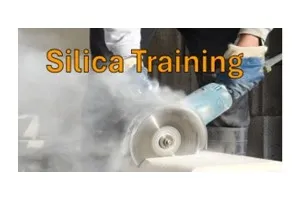
Silica training educates workers and employers on the severe health hazards (like silicosis, lung cancer) from inhaling respirable crystalline silica dust, covering OSHA standards, exposure identification, control plans (water, ventilation, PPE), and medical surveillance for industries like construction and manufacturing. These courses, often online, teach hazard recognition, safe work practices, proper PPE use (respirators), and compliance with regulations to prevent chronic illnesses from materials like concrete, stone, and sand.
- Respirable Crystalline SilicaLesson
- Respirable Crystalline Silica QuizQuiz
Course Evaluation
\
- Course Review & CompletionLesson
Certificate of Completion
Meet Your Instructor
Lead HSE Instructor

The Training Institute is a team of seasoned field experts with decades of hands-on experience across electrical safety, OSHA compliance, confined-space training, and hazardous-materials response. Our instructors combine practical jobsite expertise with proven adult-learning methodology to deliver training that meets — and exceeds — federal and industry standards.
Student Review
(
1 Review)
Similar Courses

by
The Training Institute

by
The Training Institute

by
The Training Institute
Ready to get certified?
Enroll in Respirable Crystalline Silica
Volume pricing for 5+ seats. Dedicated compliance support and audit-ready records.
Sign Up for Newsletter
Quick Links
Visit Us
1509 S. Dobson Street
Burleson, TX 76028
© 2026 The Training Institute. All rights reserved.
Course Materials
Preview the materials included with this course. Enrolled students can download all files.
- Respirable Crystalline SilicaSign in & enroll