Certified OSHA Training

How to Take Oil Sample

How to Take Oil Sample
$50Self-paced online training
Enroll now
  • Self-paced online
  • Certificate included
  • 2 learners
Buy How to Take Oil Sample

$

$50.00

$

The How to Take Oil Sample course is a fully online training program that includes interactive SCORM modules, a downloadable participant handbook, sampling-port selection diagrams, pitot-tube and drop-tube sampling procedures, and recorded knowledge checks. Every lesson is mobile-friendly and resumes automatically so lubrication technicians, reliability engineers, and maintenance crews can complete training between rounds without losing progress.

Course materials also include a printable certificate of completion, a digital wallet card for employer and audit verification, and downloadable reference pages covering ISO 4406 cleanliness codes, ISO 11500 particle counting, and the sampling best practices published by ICML and the STLE Body of Knowledge. The handbook consolidates primary versus secondary sampling locations, flushing volume calculations, bottle-handling discipline, and the chain-of-custody labeling that makes lab data trustworthy.

  • Interactive SCORM modules aligned to ICML MLA and ISO 11500 sampling guidance
  • Downloadable sampling procedure templates and bottle labels
  • Participant handbook with ISO 4406, flushing volume, and dead-leg references
  • Final assessment, printable certificate, and wallet card
  • Level

    All Levels

    Level

    Time to Complete

    0 hour 0 minute

    Lessons

    2 Lessons

    Language

    English

    Rating

    (

    0 Review

    )

    What You’ll Learn?

    Updated:

    May 4, 2026

    How to Take Oil Sample

    2 Students

    What You’ll Learn?

    Learners who complete How to Take Oil Sample training will be able to select a representative sampling location that captures wear and contamination data before the lubricant passes through a filter, apply the primary-zone concept used by ICML and Noria-taught programs, and perform a pitot-tube, drop-tube, or vacuum-pump sample with defensible technique. The program teaches the core reliability-centered lubrication principles every Machinery Lubrication Technician Level I candidate must master.

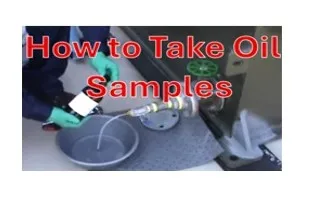
    After completing this course, learners can calculate the minimum flushing volume required to remove stagnant oil from a dead-leg, select an ultra-clean sample bottle with an ISO 4406 cleanliness code at least one range better than the target fluid cleanliness, and document the sample with chain-of-custody information including machine ID, sampling date, hours since last oil change, oil type and brand, make-up volume, and operating temperature. Learners practice sampling from circulating systems, splash-lubricated gearboxes, hydraulic reservoirs, compressor crankcases, and turbine lube oil systems without introducing ambient contamination.

    The curriculum reinforces interpretation of laboratory reports including elemental spectrometry for wear metals, additives, and contaminants; FTIR infrared for oxidation, nitration, sulfation, water, and soot; Karl Fischer moisture analysis; particle counting reported as ISO 4406 three-number codes; viscosity at 40 and 100 degrees C with viscosity index; and acid number and base number trending. Learners review alarm-limit setting using statistical alarms versus aging alarms, exception reporting workflows, and the corrective actions a reliability engineer recommends for each alarm category. Additional modules address safe handling of used oil under 40 CFR 279, hot-surface burn prevention, and proper disposal of sampling supplies.

    The How to Take Oil Sample course is a self-paced, OSHA-aligned online training program from The Training Institute. How to Take Oil Sample delivers in-depth instruction, a final assessment, and a printable certificate of completion the moment you pass.

    About the How to Take Oil Sample Course

    The How to Take Oil Sample course is a fully online training program that includes interactive SCORM modules, a downloadable participant handbook, sampling-port selection diagrams, pitot-tube and drop-tube sampling procedures, and recorded knowledge checks. Every lesson is mobile-friendly and resumes automatically so lubrication technicians, reliability engineers, and maintenance crews can complete training between rounds without losing progress.

    Course materials also include a printable certificate of completion, a digital wallet card for employer and audit verification, and downloadable reference pages covering ISO 4406 cleanliness codes, ISO 11500 particle counting, and the sampling best practices published by ICML and the STLE Body of Knowledge. The handbook consolidates primary versus secondary sampling locations, flushing volume calculations, bottle-handling discipline, and the chain-of-custody labeling that makes lab data trustworthy.

    • Interactive SCORM modules aligned to ICML MLA and ISO 11500 sampling guidance
    • Downloadable sampling procedure templates and bottle labels
    • Participant handbook with ISO 4406, flushing volume, and dead-leg references
    • Final assessment, printable certificate, and wallet card

    What You Will Learn in How to Take Oil Sample

    Learners who complete How to Take Oil Sample training will be able to select a representative sampling location that captures wear and contamination data before the lubricant passes through a filter, apply the primary-zone concept used by ICML and Noria-taught programs, and perform a pitot-tube, drop-tube, or vacuum-pump sample with defensible technique. The program teaches the core reliability-centered lubrication principles every Machinery Lubrication Technician Level I candidate must master.

    After completing this course, learners can calculate the minimum flushing volume required to remove stagnant oil from a dead-leg, select an ultra-clean sample bottle with an ISO 4406 cleanliness code at least one range better than the target fluid cleanliness, and document the sample with chain-of-custody information including machine ID, sampling date, hours since last oil change, oil type and brand, make-up volume, and operating temperature. Learners practice sampling from circulating systems, splash-lubricated gearboxes, hydraulic reservoirs, compressor crankcases, and turbine lube oil systems without introducing ambient contamination.

    The curriculum reinforces interpretation of laboratory reports including elemental spectrometry for wear metals, additives, and contaminants; FTIR infrared for oxidation, nitration, sulfation, water, and soot; Karl Fischer moisture analysis; particle counting reported as ISO 4406 three-number codes; viscosity at 40 and 100 degrees C with viscosity index; and acid number and base number trending. Learners review alarm-limit setting using statistical alarms versus aging alarms, exception reporting workflows, and the corrective actions a reliability engineer recommends for each alarm category. Additional modules address safe handling of used oil under 40 CFR 279, hot-surface burn prevention, and proper disposal of sampling supplies.

    Who Should Take How to Take Oil Sample

    This training is built for lubrication technicians, reliability engineers, predictive maintenance specialists, route-based oil samplers, machinery operators assigned sampling duties, and laboratory customer service representatives who coach client samplers. Maintenance planners, condition-monitoring program owners, and CMMS administrators responsible for sample scheduling also benefit from the curriculum when configuring route plans.

    Power generation plants, pulp and paper mills, mining operations, wind energy fleets, refineries, food and beverage processors, and fleet maintenance shops will find this course valuable as prequalification evidence for reliability program audits and for ICML Machinery Lubrication Technician Level I certification exam preparation. Contractors supporting route-based oil analysis, lubrication program assessments, and precision lubrication deployments benefit from the documented training before mobilizing to a client site.

    Anyone assigned to pull lubricant samples on a scheduled route, interpret lab reports, or set alarm limits for a condition monitoring program should complete How to Take Oil Sample training. Reliability, maintenance, and operations teams often enroll groups ahead of an oil analysis program launch or relaunch to keep a documented record of every sampler's current training status.

    Prerequisites

    Learners should have a working understanding of basic lubrication concepts including the difference between hydrodynamic, elastohydrodynamic, and boundary lubrication regimes, plus familiarity with the machinery they sample including bearings, gearboxes, hydraulic systems, and reservoirs. Exposure to ISO 4406 cleanliness coding and basic lubricant additive chemistry will accelerate the interpretation sections.

    No specific prerequisite credential is required to enroll; however, employers should ensure every new route sampler completes training and performs supervised samples before being assigned a route alone. A modern browser, a reliable internet connection, and a device with audio are the only technical requirements.

    Course Details

    Price: $50.00. Browse our full course catalog for more options.

    Your Instructor

    The Training Institute — Training Institute Instructor Team

    The Training Institute is a team of seasoned field experts with decades of hands-on experience across electrical safety, OSHA compliance, confined-space training, and hazardous-materials response. Our instructors combine practical jobsite expertise with proven adult-learning methodology to deliver training that meets — and exceeds — federal and industry standards.

    Certificate of Completion

    Upon successful completion of this training program, participants receive an official certificate of completion from The Training Institute.

    Curriculum

    • How to Take Oil Sample
      • How to Take Oil Sample
      • How to Take Oil Sample Exam
    • Course Evaluation
      • Course Review & Completion

    Standards & Compliance for How to Take Oil Sample

    How to Take Oil Sample aligns with current OSHA outreach training program guidance and is reviewed regularly against the latest federal standards. Learners completing How to Take Oil Sample receive a printable certificate they can submit to employers as documented evidence of safety training, and may purchase additional Training Institute courses to satisfy related annual requirements.

    What Will I Learn?

    Learners who complete How to Take Oil Sample training will be able to select a representative sampling location that captures wear and contamination data before the lubricant passes through a filter, apply the primary-zone concept used by ICML and Noria-taught programs, and perform a pitot-tube, drop-tube, or vacuum-pump sample with defensible technique. The program teaches the core reliability-centered lubrication principles every Machinery Lubrication Technician Level I candidate must master.

    After completing this course, learners can calculate the minimum flushing volume required to remove stagnant oil from a dead-leg, select an ultra-clean sample bottle with an ISO 4406 cleanliness code at least one range better than the target fluid cleanliness, and document the sample with chain-of-custody information including machine ID, sampling date, hours since last oil change, oil type and brand, make-up volume, and operating temperature. Learners practice sampling from circulating systems, splash-lubricated gearboxes, hydraulic reservoirs, compressor crankcases, and turbine lube oil systems without introducing ambient contamination.

    The curriculum reinforces interpretation of laboratory reports including elemental spectrometry for wear metals, additives, and contaminants; FTIR infrared for oxidation, nitration, sulfation, water, and soot; Karl Fischer moisture analysis; particle counting reported as ISO 4406 three-number codes; viscosity at 40 and 100 degrees C with viscosity index; and acid number and base number trending. Learners review alarm-limit setting using statistical alarms versus aging alarms, exception reporting workflows, and the corrective actions a reliability engineer recommends for each alarm category. Additional modules address safe handling of used oil under 40 CFR 279, hot-surface burn prevention, and proper disposal of sampling supplies.

    Target Audience

    This training is built for lubrication technicians, reliability engineers, predictive maintenance specialists, route-based oil samplers, machinery operators assigned sampling duties, and laboratory customer service representatives who coach client samplers. Maintenance planners, condition-monitoring program owners, and CMMS administrators responsible for sample scheduling also benefit from the curriculum when configuring route plans.

    Power generation plants, pulp and paper mills, mining operations, wind energy fleets, refineries, food and beverage processors, and fleet maintenance shops will find this course valuable as prequalification evidence for reliability program audits and for ICML Machinery Lubrication Technician Level I certification exam preparation. Contractors supporting route-based oil analysis, lubrication program assessments, and precision lubrication deployments benefit from the documented training before mobilizing to a client site.

    Anyone assigned to pull lubricant samples on a scheduled route, interpret lab reports, or set alarm limits for a condition monitoring program should complete How to Take Oil Sample training. Reliability, maintenance, and operations teams often enroll groups ahead of an oil analysis program launch or relaunch to keep a documented record of every sampler's current training status.

    Materials Included

    The How to Take Oil Sample course is a fully online training program that includes interactive SCORM modules, a downloadable participant handbook, sampling-port selection diagrams, pitot-tube and drop-tube sampling procedures, and recorded knowledge checks. Every lesson is mobile-friendly and resumes automatically so lubrication technicians, reliability engineers, and maintenance crews can complete training between rounds without losing progress.

    Course materials also include a printable certificate of completion, a digital wallet card for employer and audit verification, and downloadable reference pages covering ISO 4406 cleanliness codes, ISO 11500 particle counting, and the sampling best practices published by ICML and the STLE Body of Knowledge. The handbook consolidates primary versus secondary sampling locations, flushing volume calculations, bottle-handling discipline, and the chain-of-custody labeling that makes lab data trustworthy.

    • Interactive SCORM modules aligned to ICML MLA and ISO 11500 sampling guidance
    • Downloadable sampling procedure templates and bottle labels
    • Participant handbook with ISO 4406, flushing volume, and dead-leg references
    • Final assessment, printable certificate, and wallet card
    Requirements / Instructions

    Learners should have a working understanding of basic lubrication concepts including the difference between hydrodynamic, elastohydrodynamic, and boundary lubrication regimes, plus familiarity with the machinery they sample including bearings, gearboxes, hydraulic systems, and reservoirs. Exposure to ISO 4406 cleanliness coding and basic lubricant additive chemistry will accelerate the interpretation sections.

    No specific prerequisite credential is required to enroll; however, employers should ensure every new route sampler completes training and performs supervised samples before being assigned a route alone. A modern browser, a reliable internet connection, and a device with audio are the only technical requirements.

    Curriculum

    2 modules

    How to Take Oil Sample

    1 Lesson 1 Quiz
    • How to Take Oil SampleLesson
    • How to Take Oil Sample ExamQuiz

    Course Evaluation

    1 Lesson 0 Quiz
    • Course Review & CompletionLesson

    Certificate of Completion 

    Upon successful completion of this training program  participants will receive a certificate of completion.    

    Meet Your Instructor

    The Training Institute
    MSGSPCSHO-C&G

    Lead HSE Instructor

    The Training Institute

    The Training Institute is a team of seasoned field experts with decades of hands-on experience across electrical safety, OSHA compliance, confined-space training, and hazardous-materials response. Our instructors combine practical jobsite expertise with proven adult-learning methodology to deliver training that meets — and exceeds — federal and industry standards.

    Student Review

    0

    (

    0 Review

    )

    5 stars
    0 Rating
    4 stars
    0 Rating
    3 stars
    0 Rating
    2 stars
    0 Rating
    1 star
    0 Rating

    Similar Courses

    FMCSA / DOT Compliance Training training course
    0

    by

    The Training Institute

    $300.00
    Confined Spaces Competent Person Training training course
    0

    by

    The Training Institute

    $75.00
    Buy 13-Carcinogens (Required by OSHA Annually)
    0

    by

    The Training Institute

    $25.00
    $50.00

    The How to Take Oil Sample course is a fully online training program that includes interactive SCORM modules, a downloadable participant handbook, sampling-port selection diagrams, pitot-tube and drop-tube sampling procedures, and recorded knowledge checks. Every lesson is mobile-friendly and resumes automatically so lubrication technicians, reliability engineers, and maintenance crews can complete training between rounds without losing progress.

    Course materials also include a printable certificate of completion, a digital wallet card for employer and audit verification, and downloadable reference pages covering ISO 4406 cleanliness codes, ISO 11500 particle counting, and the sampling best practices published by ICML and the STLE Body of Knowledge. The handbook consolidates primary versus secondary sampling locations, flushing volume calculations, bottle-handling discipline, and the chain-of-custody labeling that makes lab data trustworthy.

    • Interactive SCORM modules aligned to ICML MLA and ISO 11500 sampling guidance
    • Downloadable sampling procedure templates and bottle labels
    • Participant handbook with ISO 4406, flushing volume, and dead-leg references
    • Final assessment, printable certificate, and wallet card
    • Level

      All Levels

      Time to Complete

      0 hour 0 minute

      Lessons

      2 Lessons

      Language

      English

      Rating

      (

      0 Review

      )

      0

      Ready to get certified?

      Enroll in How to Take Oil Sample

      Volume pricing for 5+ seats. Dedicated compliance support and audit-ready records.