Certified OSHA Training
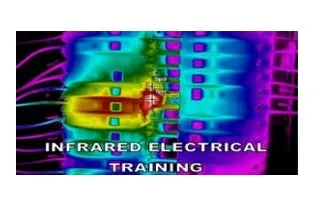
ILT Infrared Electrical Training
- OSHA-Authorized
- DOL-Aligned
$
$500.00$
What You’ll Learn?
Updated:
ILT Infrared Electrical Training
\
What You’ll Learn?
Course Details
ILT Infrared Electrical Training is an in-person, instructor-led classroom course that teaches technicians to use infrared thermography and handheld thermal imaging cameras for electrical inspection and predictive maintenance. Guided by a qualified instructor, you work hands-on with thermal cameras to survey energized switchgear, panels, and motors and spot the abnormal heat that signals loose connections, overloads, and phase imbalance before they fail. Classroom instruction grounds the fieldwork in infrared theory — emissivity, heat transfer, and image interpretation — so every thermogram you capture is measured, not guessed. You learn to document findings, rank severity by temperature rise, and turn each survey into the corrective work order that keeps a predictive maintenance program running. Safety runs throughout the class, which covers NFPA 70E awareness, arc-rated PPE, and safe approach boundaries for scanning energized equipment. The program totals 4.75 contact hours and awards a certificate of completion plus 0.48 IACET CEU.
The course is built for industrial electricians, maintenance and reliability technicians, and facility managers who perform or oversee thermographic surveys of electrical assets. By the end you can plan an inspection route, capture accurate thermal images, interpret hot spots against load, and write defensible reports that reduce unplanned outages. Because the class is hands-on with live equipment and real cameras, you leave ready to apply infrared inspection skills on the job rather than only in theory. Reserve your seat to bring practical, camera-in-hand thermography expertise back to your maintenance team.
Course Syllabus
Course Description
The ILT Infrared Electrical Training course is an in-person, instructor-led, OSHA-aligned classroom training program from The Training Institute. ILT Infrared Electrical Training delivers in-depth instruction, a final assessment, and a printable certificate of completion the moment you pass.
About the ILT Infrared Electrical Training Course
Infrared (IR) electrical training teaches professionals to use thermal-imaging cameras to find hidden electrical problems — loose connections, overloads, and failing components — by detecting abnormal heat. The result is improved safety, fewer costly failures, and documented compliance with standards such as NFPA 70E. The course covers infrared science, heat transfer, image analysis, reporting, and practical application on switchgear, panels, motors, and more, building toward Level I, II, or III thermographer certification.
Enrollment includes a digital copy of the training slides plus a full set of downloadable field references:
- An ASTM E1934 severity reference card and a thermogram documentation template.
- An NFPA 70E task-hazard-analysis worksheet tailored to IR inspections, and sample route sheets.
- A printed route-sheet template and a radiometric-report template populated with sample data.
- A checklist for verifying load conditions during the survey.
- Guidance on retaining radiometric JPEGs for insurance and audit review.
- A recommended-reading list covering NFPA 70B 2023, NETA MTS (latest edition), ASTM E1934, ASTM E1316, and the ASNT SNT-TC-1A thermographer qualification pathways.
A certificate of completion documenting classroom and hands-on hours is issued on passing the final assessment, and can be submitted for NICET, ASNT, or employer continuing-education programs where applicable.
What You Will Learn in ILT Infrared Electrical Training
This instructor-led course gives thermographers the theory and field skills to perform ASTM E1934 electrical inspections that satisfy NFPA 70B, NETA MTS, and insurance-carrier requirements. Core topics include:
- The physics of infrared radiation — emissivity, reflectivity, and transmissivity — and how atmospheric conditions, wind, solar loading, and distance-to-spot ratio affect thermogram accuracy.
- Camera selection: resolution, lens choice, focus discipline, level and span adjustment, temperature-measurement functions, and using palettes to reveal subtle anomalies.
- Load verification, target identification, and safe approach boundaries per NFPA 70E — including arc-flash and shock protection when opening energized enclosures through IR windows or permanent viewing ports.
- The ASTM E1934 severity criteria for delta-T over ambient and delta-T between similar components, and the Level I (routine), Level II (certified thermographer), and Level III (expert) inspection hierarchy.
- Documenting findings with radiometric JPEGs, spot and area measurements, load data, ambient conditions, and repair recommendations that drive corrective-maintenance work orders.
- Recognizing common false positives — solar reflection, induction heating, and solar-loaded bus — and the ASNT SNT-TC-1A qualification pathways for Level I and Level II certification.
- Hands-on exercises on live switchgear, MCCs, transformers, and distribution panels to reinforce classroom theory.
Graduates are prepared to build or improve a predictive-maintenance program that reduces unplanned outages and supports insurance recertification.
Who Should Take ILT Infrared Electrical Training
Infrared electrical training is built for the maintenance, reliability, and safety professionals who perform or oversee thermographic surveys — from beginners learning thermal-imaging basics to certified technicians earning NETA credits. The course is a strong fit for:
- Industrial electricians, maintenance technicians, reliability engineers, facility managers, and third-party inspectors who perform or oversee infrared electrical surveys.
- Insurance loss-control representatives and EHS staff who interpret thermographic reports on behalf of their organizations.
- Corporate reliability program managers who evaluate third-party contractors and standardize route sheets, reporting formats, and severity criteria across multiple plants.
- Operations leaders accountable for reducing unplanned downtime in manufacturing plants, commercial buildings, or utility substations.
- Utility substation crews, commissioning engineers for data centers and hospitals, facilities engineers at semiconductor fabs, and cement- and steel-plant electricians.
- Third-party NETA contractors delivering Level II and Level III thermographic services, and final-year apprentice electricians qualifying for employer-assigned IR survey work.
- Safety professionals who audit contractor thermography reports, validate severity classifications, and push corrective-maintenance tickets into CMMS systems.
Insurance carriers accept course completion as evidence of a defensible predictive-maintenance program.
Prerequisites
Prerequisites include basic electrical theory; familiarity with common distribution equipment such as switchgear, MCCs, and transformers; and completion of employer-required electrical safety training. Participants must bring an infrared camera they are authorized to use and appropriate arc-rated PPE per NFPA 70E.
A working knowledge of standard electrical safety procedures, lockout/tagout, and site-specific energized-work policies is expected, so classroom examples can be tied directly to the equipment the learner maintains. Participants new to thermography should review ASTM E1316 infrared terminology before the first session to get maximum benefit from the exercises, case studies, and live-equipment demonstrations. Optional pre-reading lists are provided two weeks before class.
Course Details
Price: $500.00. Browse our full course catalog for more options.
Your Instructor
The Training Institute — Training Institute Instructor Team
The Training Institute is a team of seasoned field experts with decades of hands-on experience across electrical safety, OSHA compliance, confined-space training, and hazardous-materials response. Our instructors combine practical jobsite expertise with proven adult-learning methodology to deliver training that meets — and exceeds — federal and industry standards.
Certificate of Completion
Upon successful completion of this training program, participants receive an official certificate of completion from The Training Institute.
Curriculum
- ILT Registration Form (Complete Before Live Training)
- Course Evaluation
- Course Review & Completion
Standards & Compliance for ILT Infrared Electrical Training
ILT Infrared Electrical Training aligns with current OSHA outreach training program guidance and is reviewed regularly against the latest federal standards. Learners completing ILT Infrared Electrical Training receive a printable certificate they can submit to employers as documented evidence of safety training, and may purchase additional Training Institute courses to satisfy related annual requirements.
What Will I Learn?
This Instructor-Led Infrared Electrical Training course provides thermographers with the theory and field skills to perform ASTM E1934 electrical inspections that satisfy NFPA 70B, NETA MTS, and insurance carrier requirements. Participants learn the physics of infrared radiation, emissivity, reflectivity, transmissivity, and how atmospheric conditions, wind, solar loading, and distance-to-spot ratio affect thermogram accuracy. The course reviews camera selection, resolution, lens choice, focus discipline, level and span adjustment, temperature measurement functions, and the use of palettes to reveal subtle anomalies. Learners practice load verification, target identification, and safe approach boundaries per NFPA 70E, including arc flash and shock protection while opening energized enclosures with IR windows or permanent viewing ports. The program details the ASTM E1934 severity criteria for delta-T over ambient and delta-T between similar components, and explains the Level I routine, Level II certified thermographer, and Level III expert inspection hierarchy. Participants learn to document findings with radiometric JPEGs, spot and area measurements, load data, ambient conditions, and repair recommendations that drive corrective maintenance work orders. The course addresses common false positives such as solar reflection, induction heating, and solar-loaded bus, and covers qualification pathways under ASNT SNT-TC-1A for Level I and Level II certification. Hands-on exercises on live switchgear, MCCs, transformers, and distribution panels reinforce classroom theory. Graduates are prepared to build or improve a predictive maintenance program that reduces unplanned outages and supports insurance recertification.
Target Audience
IR Electrical Training targets maintenance & reliability pros, electricians, engineers, inspectors, and facility managers who use infrared thermography for predictive maintenance, asset health, and energy efficiency, from beginners learning thermal imaging basics to certified techs needing NETA credits, focusing on identifying electrical faults in gear like panels, switchgear, and transformers to prevent downtime and ensure safety.
Designed for industrial electricians, maintenance technicians, reliability engineers, facility managers, and third-party inspectors who perform or oversee infrared electrical surveys. Also valuable for insurance loss-control representatives, EHS staff who interpret thermographic reports on behalf of their organizations, corporate reliability program managers who evaluate third-party contractors, and operations leaders accountable for reducing unplanned downtime in manufacturing plants, commercial buildings, or utility substations.
Designed for industrial electricians, maintenance technicians, reliability engineers, facility managers, and third-party inspectors who perform or oversee infrared electrical surveys. Also valuable for insurance loss-control representatives, EHS staff who interpret thermographic reports on behalf of their organizations, corporate reliability program managers who evaluate third-party contractors, and operations leaders accountable for reducing unplanned downtime in manufacturing plants, commercial buildings, or utility substations.
Designed for industrial electricians, maintenance technicians, reliability engineers, facility managers, and third-party inspectors who perform or oversee infrared electrical surveys. Also valuable for insurance loss-control representatives, EHS staff who interpret thermographic reports on behalf of their organizations, corporate reliability program managers who evaluate third-party contractors, and operations leaders accountable for reducing unplanned downtime in manufacturing plants, commercial buildings, or utility substations.
Additional audiences include utility substation crews, commissioning engineers for data centers and hospitals, facilities engineers at semiconductor fabs, cement and steel plant electricians, and third-party NETA contractors who deliver Level II and Level III thermographic services. Apprentice electricians on the final year of their program use the class to qualify for employer-assigned IR survey work, while safety professionals gain enough insight to audit contractor thermography reports, validate severity classifications, and push corrective maintenance tickets into CMMS systems. Corporate reliability managers use the program to standardize route sheets, reporting formats, and severity criteria across multiple plants, and insurance carriers use completion as evidence of a defensible predictive-maintenance program.
Total Course Duration
4 hours, 45 minutes
Materials Included
IR Electrical Training teaches professionals to use thermal imaging cameras to find hidden electrical problems like loose connections, overloads, and bad components by detecting abnormal heat, improving safety, preventing costly failures, and ensuring compliance with standards like NFPA 70E. Courses cover infrared science, heat transfer, image analysis, reporting, and practical application on switchgear, panels, motors, and more, leading to certifications like Level I, II, or III.
Participants receive an ASTM E1934 severity reference card, a thermogram documentation template, an NFPA 70E task hazard analysis worksheet for IR inspections, sample route sheets, and a digital copy of the training slides. A certificate of completion documenting classroom hours is issued upon successful completion and submitted for continuing education units where applicable.
Participants receive an ASTM E1934 severity reference card, a thermogram documentation template, an NFPA 70E task hazard analysis worksheet for IR inspections, sample route sheets, and a digital copy of the training slides. A certificate of completion documenting classroom hours is issued upon successful completion and submitted for continuing education units where applicable.
Participants receive an ASTM E1934 severity reference card, a thermogram documentation template, an NFPA 70E task hazard analysis worksheet for IR inspections, sample route sheets, and a digital copy of the training slides. A certificate of completion documenting classroom hours is issued upon successful completion and submitted for continuing education units where applicable.
Supplemental resources include a printed route-sheet template, a radiometric-report template populated with sample data, a checklist for verifying load conditions during the survey, an NFPA 70E job-hazard-analysis form tailored to IR inspections, and guidance on retaining radiometric JPEGs for insurance and audit review. A digital recommended-reading list includes NFPA 70B 2023, NETA MTS latest edition, ASTM E1934, ASTM E1316, and ASNT SNT-TC-1A for thermographer qualification pathways. The certificate of completion documents classroom and hands-on hours and can be submitted for NICET, ASNT, or employer continuing-education programs.
Requirements / Instructions
Prerequisites include basic electrical theory, familiarity with common distribution equipment such as switchgear, MCCs, and transformers, and completion of employer-required electrical safety training. Participants must bring an infrared camera they are authorized to use and appropriate arc-rated PPE per NFPA 70E. A working knowledge of standard electrical safety procedures, lockout tagout, and site-specific energized work policies is expected so classroom examples can be tied directly to equipment the learner maintains. Participants new to thermography should review ASTM E1316 infrared terminology before the first session to get maximum benefit from classroom exercises, case studies, and the live-equipment demonstrations on the final day of instruction. Optional pre-reading lists are provided two weeks before class.
Prerequisites include basic electrical theory, familiarity with common distribution equipment such as switchgear, MCCs, and transformers, and completion of employer-required electrical safety training. Participants must bring an infrared camera they are authorized to use and appropriate arc-rated PPE per NFPA 70E. A working knowledge of standard electrical safety procedures, lockout tagout, and site-specific energized work policies is expected so classroom examples can be tied directly to equipment the learner maintains. Participants new to thermography should review ASTM E1316 infrared terminology before the first session to get maximum benefit from classroom exercises, case studies, and the live-equipment demonstrations on the final day of instruction. Optional pre-reading lists are provided two weeks before class.
Prerequisites include basic electrical theory, familiarity with common distribution equipment such as switchgear, MCCs, and transformers, and completion of employer-required electrical safety training. Participants must bring an infrared camera they are authorized to use and appropriate arc-rated PPE per NFPA 70E. A working knowledge of standard electrical safety procedures, lockout tagout, and site-specific energized work policies is expected so classroom examples can be tied directly to equipment the learner maintains. Participants new to thermography should review ASTM E1316 infrared terminology before the first session to get maximum benefit from classroom exercises, case studies, and the live-equipment demonstrations on the final day of instruction. Optional pre-reading lists are provided two weeks before class.
Curriculum
2 modules · 4 hours
ILT Registration Form (Complete Before Live Training)
This form must be completed prior to first live instructor led training session.
- Registration FormTask
Course Evaluation
\
- Course Review & CompletionLesson
Certificate of Completion
Meet Your Instructor
Lead HSE Instructor

The Training Institute is a team of seasoned field experts with decades of hands-on experience across electrical safety, OSHA compliance, confined-space training, and hazardous-materials response. Our instructors combine practical jobsite expertise with proven adult-learning methodology to deliver training that meets — and exceeds — federal and industry standards.
Student Review
(
0 Review)
Similar Courses
by
The Training Institute
by
The Training Institute
by
The Training Institute
Ready to get certified?
Enroll in ILT Infrared Electrical Training
Volume pricing for 5+ seats. Dedicated compliance support and audit-ready records.
Sign Up for Newsletter
Quick Links
Visit Us
1509 S. Dobson Street
Burleson, TX 76028
© 2026 The Training Institute. All rights reserved.