Certified OSHA Training

Protection Basics – Relay 101
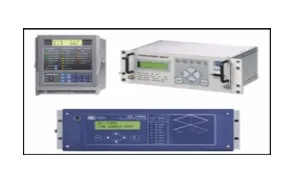
Protection Basics – Relay 101
$100Self-paced online training
Enroll now
  • 2 hours
  • Self-paced online
  • Certificate included
  • 1 learner
Buy Protection Basics – Relay 101

$

$100.00

$

Course syllabus
Participants receive an IEEE C37.2 device-number reference card, sample time-current coordination curves, a relay settings sheet template, a CT and VT wiring crib sheet, and a digital copy of the lecture slides. Classroom labs use modern microprocessor relays and secondary injection test sets so learners can practice acceptance tests they will perform on the job.
Additional classroom materials include a printed IEEE C37.2 device number pocket guide, a CT and VT wiring troubleshooting flowchart, sample time-current coordination curves for industrial feeders, motor, and transformer protection, a NETA MTS acceptance test sheet, an arc flash incident energy worksheet, and a glossary of terms drawn from IEEE Std 242 Buff Book, IEEE Std 399 Brown Book, and IEEE Std 1584 arc flash calculation guide. Post-class support includes 30 days of instructor email access for questions that arise once learners return to their home substations or plants.
A supplemental question bank of 80 multiple-choice items indexed to IEEE, IEC, NETA, and NFPA 70E references accompanies the class for self-paced review between sessions. Learners also receive a sample commissioning turnover package showing how field-test results, relay settings prints, and coordination studies integrate into a final owner deliverable for a new substation or industrial power expansion project.

Level

Intermediate

Level

Time to Complete

2 hours 15 minutes

Lessons

2 Lessons

Language

English

Rating

(

0 Review

)

What You’ll Learn?

Updated:

May 4, 2026

Protection Basics – Relay 101

1 Student

What You’ll Learn?

This Protection Basics - Relay 101 course introduces protection engineers, technicians, and operators to the fundamentals of electrical power-system protection using both electromechanical and modern microprocessor-based relays. Participants learn the philosophy of protection, including sensitivity, selectivity, speed, and reliability, and how these principles translate into zones of protection for generators, transformers, buses, lines, motors, and feeders. The course covers instrument transformer basics, including current transformer ratio, accuracy class, burden, and saturation, plus voltage transformer wye and delta connections, and explains how CT polarity, secondary wiring, and shorting practices protect personnel and equipment. Learners study the most common protection functions defined by IEEE C37.2 device numbers, including 50/51 overcurrent, 27/59 under and over voltage, 81 frequency, 87 differential, 21 distance, 32 reverse power, 46 negative sequence, 49 thermal, and 86 lockout. The program walks through time-current coordination, pickup settings, inverse-time curves (IEEE, IEC, and user-defined), instantaneous elements, and breaker failure schemes. Participants gain hands-on exposure to NETA MTS acceptance and maintenance testing, secondary injection, ratio and polarity verification, and reading relay event records and oscillographic COMTRADE files. The course closes with a review of arc flash implications of protection settings, including maintenance switches and instantaneous bypass per NFPA 70E. Upon completion, participants can interpret single-line diagrams, relay settings sheets, coordination studies, and field-test reports with confidence.

The Protection Basics - Relay 101 course is a self-paced, OSHA-aligned online training program from The Training Institute. Protection Basics - Relay 101 delivers in-depth instruction, a final assessment, and a printable certificate of completion the moment you pass.

About the Protection Basics - Relay 101 Course

Course syllabus

Participants receive an IEEE C37.2 device-number reference card, sample time-current coordination curves, a relay settings sheet template, a CT and VT wiring crib sheet, and a digital copy of the lecture slides. Classroom labs use modern microprocessor relays and secondary injection test sets so learners can practice acceptance tests they will perform on the job.

Participants receive an IEEE C37.2 device-number reference card, sample time-current coordination curves, a relay settings sheet template, a CT and VT wiring crib sheet, and a digital copy of the lecture slides. Classroom labs use modern microprocessor relays and secondary injection test sets so learners can practice acceptance tests they will perform on the job.

Participants receive an IEEE C37.2 device-number reference card, sample time-current coordination curves, a relay settings sheet template, a CT and VT wiring crib sheet, and a digital copy of the lecture slides. Classroom labs use modern microprocessor relays and secondary injection test sets so learners can practice acceptance tests they will perform on the job.

Additional classroom materials include a printed IEEE C37.2 device number pocket guide, a CT and VT wiring troubleshooting flowchart, sample time-current coordination curves for industrial feeders, motor, and transformer protection, a NETA MTS acceptance test sheet, an arc flash incident energy worksheet, and a glossary of terms drawn from IEEE Std 242 Buff Book, IEEE Std 399 Brown Book, and IEEE Std 1584 arc flash calculation guide. Post-class support includes 30 days of instructor email access for questions that arise once learners return to their home substations or plants.

A supplemental question bank of 80 multiple-choice items indexed to IEEE, IEC, NETA, and NFPA 70E references accompanies the class for self-paced review between sessions. Learners also receive a sample commissioning turnover package showing how field-test results, relay settings prints, and coordination studies integrate into a final owner deliverable for a new substation or industrial power expansion project.

What You Will Learn in Protection Basics - Relay 101

This Protection Basics - Relay 101 course introduces protection engineers, technicians, and operators to the fundamentals of electrical power-system protection using both electromechanical and modern microprocessor-based relays. Participants learn the philosophy of protection, including sensitivity, selectivity, speed, and reliability, and how these principles translate into zones of protection for generators, transformers, buses, lines, motors, and feeders. The course covers instrument transformer basics, including current transformer ratio, accuracy class, burden, and saturation, plus voltage transformer wye and delta connections, and explains how CT polarity, secondary wiring, and shorting practices protect personnel and equipment. Learners study the most common protection functions defined by IEEE C37.2 device numbers, including 50/51 overcurrent, 27/59 under and over voltage, 81 frequency, 87 differential, 21 distance, 32 reverse power, 46 negative sequence, 49 thermal, and 86 lockout. The program walks through time-current coordination, pickup settings, inverse-time curves (IEEE, IEC, and user-defined), instantaneous elements, and breaker failure schemes. Participants gain hands-on exposure to NETA MTS acceptance and maintenance testing, secondary injection, ratio and polarity verification, and reading relay event records and oscillographic COMTRADE files. The course closes with a review of arc flash implications of protection settings, including maintenance switches and instantaneous bypass per NFPA 70E. Upon completion, participants can interpret single-line diagrams, relay settings sheets, coordination studies, and field-test reports with confidence.

Who Should Take Protection Basics - Relay 101

- Field Technicians
- Junior Engineers
- Anyone transitioning from EM relays to MP relays

Intended for substation technicians, protection and control engineers in training, commissioning technicians, plant electricians, NETA test-technician candidates, and operations staff who rely on protective relays to maintain system reliability. Equally valuable for new engineering graduates, cross-training electricians transitioning into relay work, and utility apprentices preparing for journeyman exams. Consulting engineers who produce coordination studies for industrial and commercial clients also benefit from the hands-on field perspective.

Intended for substation technicians, protection and control engineers in training, commissioning technicians, plant electricians, NETA test-technician candidates, and operations staff who rely on protective relays to maintain system reliability. Equally valuable for new engineering graduates, cross-training electricians transitioning into relay work, and utility apprentices preparing for journeyman exams. Consulting engineers who produce coordination studies for industrial and commercial clients also benefit from the hands-on field perspective.

Intended for substation technicians, protection and control engineers in training, commissioning technicians, plant electricians, NETA test-technician candidates, and operations staff who rely on protective relays to maintain system reliability. Equally valuable for new engineering graduates, cross-training electricians transitioning into relay work, and utility apprentices preparing for journeyman exams. Consulting engineers who produce coordination studies for industrial and commercial clients also benefit from the hands-on field perspective.

Relay 101 also benefits mining and heavy-industry electricians who work on medium-voltage mine feeders, oil and gas facility electrical foremen, renewable energy technicians commissioning utility-scale solar and wind plants, and data center power technicians who must understand UPS bypass and paralleling relays. Engineering students entering their first substation job use the class as a bridge between classroom circuit theory and field commissioning, while retiring senior engineers use the content to mentor the next generation through shadow programs at their utility or industrial facility.

Prerequisites

To successfully complete this course, participants must:
- Complete all lessons and required modules in sequence
- View all instructional videos and review all reading materials
- Complete all quizzes and knowledge checks
- Achieve a minimum passing score of 80% on the final assessment (unless otherwise specified)
- Complete any required acknowledgments or evaluations

Learners are responsible for ensuring they complete all required components prior to requesting certification.

Participants should understand basic AC electrical theory, single-line diagrams, per-unit concepts, and have field experience in medium- or low-voltage electrical systems. Familiarity with NFPA 70E work practices and employer-issued electrical safety training is required to perform any hands-on exercises on energized or test-bench equipment. A basic working knowledge of Ohm's law, phasor diagrams, and common three-phase transformer configurations will let participants follow every classroom example without pausing for remedial discussion. Learners who have never commissioned a modern microprocessor relay are encouraged to review any manufacturer instruction manual before class so vendor-specific terminology is familiar during hands-on time.

Participants should understand basic AC electrical theory, single-line diagrams, per-unit concepts, and have field experience in medium- or low-voltage electrical systems. Familiarity with NFPA 70E work practices and employer-issued electrical safety training is required to perform any hands-on exercises on energized or test-bench equipment. A basic working knowledge of Ohm's law, phasor diagrams, and common three-phase transformer configurations will let participants follow every classroom example without pausing for remedial discussion. Learners who have never commissioned a modern microprocessor relay are encouraged to review any manufacturer instruction manual before class so vendor-specific terminology is familiar during hands-on time.

Participants should understand basic AC electrical theory, single-line diagrams, per-unit concepts, and have field experience in medium- or low-voltage electrical systems. Familiarity with NFPA 70E work practices and employer-issued electrical safety training is required to perform any hands-on exercises on energized or test-bench equipment. A basic working knowledge of Ohm's law, phasor diagrams, and common three-phase transformer configurations will let participants follow every classroom example without pausing for remedial discussion. Learners who have never commissioned a modern microprocessor relay are encouraged to review any manufacturer instruction manual before class so vendor-specific terminology is familiar during hands-on time.

Course Details

Level: Intermediate. Duration: 2 hours 15 minutes. Price: $100.00. Browse our full course catalog for more options.

Your Instructor

The Training Institute — Training Institute Instructor Team

The Training Institute is a team of seasoned field experts with decades of hands-on experience across electrical safety, OSHA compliance, confined-space training, and hazardous-materials response. Our instructors combine practical jobsite expertise with proven adult-learning methodology to deliver training that meets — and exceeds — federal and industry standards.

Certificate of Completion

Upon successful completion of this training program, participants receive an official certificate of completion from The Training Institute.

Curriculum

  • Protection Relay 101
    • Protection Relay 101
    • Protection Relay Basic Quiz
  • Course Evaluation
    • Course Review & Completion

Standards & Compliance for Protection Basics - Relay 101

Protection Basics - Relay 101 aligns with current OSHA outreach training program guidance and is reviewed regularly against the latest federal standards. Learners completing Protection Basics - Relay 101 receive a printable certificate they can submit to employers as documented evidence of safety training, and may purchase additional Training Institute courses to satisfy related annual requirements.

What Will I Learn?

This Protection Basics - Relay 101 course introduces protection engineers, technicians, and operators to the fundamentals of electrical power-system protection using both electromechanical and modern microprocessor-based relays. Participants learn the philosophy of protection, including sensitivity, selectivity, speed, and reliability, and how these principles translate into zones of protection for generators, transformers, buses, lines, motors, and feeders. The course covers instrument transformer basics, including current transformer ratio, accuracy class, burden, and saturation, plus voltage transformer wye and delta connections, and explains how CT polarity, secondary wiring, and shorting practices protect personnel and equipment. Learners study the most common protection functions defined by IEEE C37.2 device numbers, including 50/51 overcurrent, 27/59 under and over voltage, 81 frequency, 87 differential, 21 distance, 32 reverse power, 46 negative sequence, 49 thermal, and 86 lockout. The program walks through time-current coordination, pickup settings, inverse-time curves (IEEE, IEC, and user-defined), instantaneous elements, and breaker failure schemes. Participants gain hands-on exposure to NETA MTS acceptance and maintenance testing, secondary injection, ratio and polarity verification, and reading relay event records and oscillographic COMTRADE files. The course closes with a review of arc flash implications of protection settings, including maintenance switches and instantaneous bypass per NFPA 70E. Upon completion, participants can interpret single-line diagrams, relay settings sheets, coordination studies, and field-test reports with confidence.

Target Audience

- Field Technicians
- Junior Engineers
- Anyone transitioning from EM relays to MP relays

Intended for substation technicians, protection and control engineers in training, commissioning technicians, plant electricians, NETA test-technician candidates, and operations staff who rely on protective relays to maintain system reliability. Equally valuable for new engineering graduates, cross-training electricians transitioning into relay work, and utility apprentices preparing for journeyman exams. Consulting engineers who produce coordination studies for industrial and commercial clients also benefit from the hands-on field perspective.

Intended for substation technicians, protection and control engineers in training, commissioning technicians, plant electricians, NETA test-technician candidates, and operations staff who rely on protective relays to maintain system reliability. Equally valuable for new engineering graduates, cross-training electricians transitioning into relay work, and utility apprentices preparing for journeyman exams. Consulting engineers who produce coordination studies for industrial and commercial clients also benefit from the hands-on field perspective.

Intended for substation technicians, protection and control engineers in training, commissioning technicians, plant electricians, NETA test-technician candidates, and operations staff who rely on protective relays to maintain system reliability. Equally valuable for new engineering graduates, cross-training electricians transitioning into relay work, and utility apprentices preparing for journeyman exams. Consulting engineers who produce coordination studies for industrial and commercial clients also benefit from the hands-on field perspective.

Relay 101 also benefits mining and heavy-industry electricians who work on medium-voltage mine feeders, oil and gas facility electrical foremen, renewable energy technicians commissioning utility-scale solar and wind plants, and data center power technicians who must understand UPS bypass and paralleling relays. Engineering students entering their first substation job use the class as a bridge between classroom circuit theory and field commissioning, while retiring senior engineers use the content to mentor the next generation through shadow programs at their utility or industrial facility.

Total Course Duration

2 hours, 15 minutes

Materials Included

Course syllabus

Participants receive an IEEE C37.2 device-number reference card, sample time-current coordination curves, a relay settings sheet template, a CT and VT wiring crib sheet, and a digital copy of the lecture slides. Classroom labs use modern microprocessor relays and secondary injection test sets so learners can practice acceptance tests they will perform on the job.

Participants receive an IEEE C37.2 device-number reference card, sample time-current coordination curves, a relay settings sheet template, a CT and VT wiring crib sheet, and a digital copy of the lecture slides. Classroom labs use modern microprocessor relays and secondary injection test sets so learners can practice acceptance tests they will perform on the job.

Participants receive an IEEE C37.2 device-number reference card, sample time-current coordination curves, a relay settings sheet template, a CT and VT wiring crib sheet, and a digital copy of the lecture slides. Classroom labs use modern microprocessor relays and secondary injection test sets so learners can practice acceptance tests they will perform on the job.

Additional classroom materials include a printed IEEE C37.2 device number pocket guide, a CT and VT wiring troubleshooting flowchart, sample time-current coordination curves for industrial feeders, motor, and transformer protection, a NETA MTS acceptance test sheet, an arc flash incident energy worksheet, and a glossary of terms drawn from IEEE Std 242 Buff Book, IEEE Std 399 Brown Book, and IEEE Std 1584 arc flash calculation guide. Post-class support includes 30 days of instructor email access for questions that arise once learners return to their home substations or plants.

A supplemental question bank of 80 multiple-choice items indexed to IEEE, IEC, NETA, and NFPA 70E references accompanies the class for self-paced review between sessions. Learners also receive a sample commissioning turnover package showing how field-test results, relay settings prints, and coordination studies integrate into a final owner deliverable for a new substation or industrial power expansion project.

Requirements / Instructions

To successfully complete this course, participants must:
- Complete all lessons and required modules in sequence
- View all instructional videos and review all reading materials
- Complete all quizzes and knowledge checks
- Achieve a minimum passing score of 80% on the final assessment (unless otherwise specified)
- Complete any required acknowledgments or evaluations

Learners are responsible for ensuring they complete all required components prior to requesting certification.

Participants should understand basic AC electrical theory, single-line diagrams, per-unit concepts, and have field experience in medium- or low-voltage electrical systems. Familiarity with NFPA 70E work practices and employer-issued electrical safety training is required to perform any hands-on exercises on energized or test-bench equipment. A basic working knowledge of Ohm's law, phasor diagrams, and common three-phase transformer configurations will let participants follow every classroom example without pausing for remedial discussion. Learners who have never commissioned a modern microprocessor relay are encouraged to review any manufacturer instruction manual before class so vendor-specific terminology is familiar during hands-on time.

Participants should understand basic AC electrical theory, single-line diagrams, per-unit concepts, and have field experience in medium- or low-voltage electrical systems. Familiarity with NFPA 70E work practices and employer-issued electrical safety training is required to perform any hands-on exercises on energized or test-bench equipment. A basic working knowledge of Ohm's law, phasor diagrams, and common three-phase transformer configurations will let participants follow every classroom example without pausing for remedial discussion. Learners who have never commissioned a modern microprocessor relay are encouraged to review any manufacturer instruction manual before class so vendor-specific terminology is familiar during hands-on time.

Participants should understand basic AC electrical theory, single-line diagrams, per-unit concepts, and have field experience in medium- or low-voltage electrical systems. Familiarity with NFPA 70E work practices and employer-issued electrical safety training is required to perform any hands-on exercises on energized or test-bench equipment. A basic working knowledge of Ohm's law, phasor diagrams, and common three-phase transformer configurations will let participants follow every classroom example without pausing for remedial discussion. Learners who have never commissioned a modern microprocessor relay are encouraged to review any manufacturer instruction manual before class so vendor-specific terminology is familiar during hands-on time.

Curriculum

2 modules · 2 hours

Protection Relay 101

1 Lesson 1 Quiz
  • Protection Relay 101Lesson
  • Protection Relay Basic QuizQuiz

Course Evaluation

1 Lesson 0 Quiz
  • Course Review & CompletionLesson

Certificate of Completion 

Upon successful completion of this training program  participants will receive a certificate of completion.    

Meet Your Instructor

The Training Institute
MSGSPCSHO-C&G

Lead HSE Instructor

The Training Institute

The Training Institute is a team of seasoned field experts with decades of hands-on experience across electrical safety, OSHA compliance, confined-space training, and hazardous-materials response. Our instructors combine practical jobsite expertise with proven adult-learning methodology to deliver training that meets — and exceeds — federal and industry standards.

Student Review

0

(

0 Review

)

5 stars
0 Rating
4 stars
0 Rating
3 stars
0 Rating
2 stars
0 Rating
1 star
0 Rating

Similar Courses

Confined Spaces Competent Person Training training course
0

by

The Training Institute

$75.00
Buy 13-Carcinogens (Required by OSHA Annually)
0

by

The Training Institute

$25.00
Buy NFPA70E Qualified Electrical Worker
0

by

The Training Institute

$300.00
$100.00
Course syllabus
Participants receive an IEEE C37.2 device-number reference card, sample time-current coordination curves, a relay settings sheet template, a CT and VT wiring crib sheet, and a digital copy of the lecture slides. Classroom labs use modern microprocessor relays and secondary injection test sets so learners can practice acceptance tests they will perform on the job.
Additional classroom materials include a printed IEEE C37.2 device number pocket guide, a CT and VT wiring troubleshooting flowchart, sample time-current coordination curves for industrial feeders, motor, and transformer protection, a NETA MTS acceptance test sheet, an arc flash incident energy worksheet, and a glossary of terms drawn from IEEE Std 242 Buff Book, IEEE Std 399 Brown Book, and IEEE Std 1584 arc flash calculation guide. Post-class support includes 30 days of instructor email access for questions that arise once learners return to their home substations or plants.
A supplemental question bank of 80 multiple-choice items indexed to IEEE, IEC, NETA, and NFPA 70E references accompanies the class for self-paced review between sessions. Learners also receive a sample commissioning turnover package showing how field-test results, relay settings prints, and coordination studies integrate into a final owner deliverable for a new substation or industrial power expansion project.

Level

Intermediate

Time to Complete

2 hours 15 minutes

Lessons

2 Lessons

Language

English

Rating

(

0 Review

)

0

Ready to get certified?

Enroll in Protection Basics – Relay 101

Volume pricing for 5+ seats. Dedicated compliance support and audit-ready records.