Certified OSHA Training
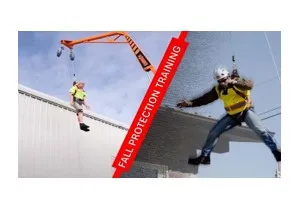
Fall Protection Training
- OSHA-Authorized
- DOL-Aligned
$
$75.00$
What You’ll Learn?
Updated:
Fall Protection Training
\
What You’ll Learn?
The Fall Protection Training course is a self-paced, OSHA-aligned online training program from The Training Institute. Fall Protection Training delivers in-depth instruction, a final assessment, and a printable certificate of completion the moment you pass.
About the Fall Protection Training Course
The Fall Protection Training course is a fully online training program that includes interactive SCORM modules, a downloadable participant handbook, anchor-point and lanyard selection worksheets, fall-clearance calculation examples, and recorded knowledge checks. Every lesson is mobile-friendly and resumes automatically so construction workers, steel erectors, roofers, and general industry maintenance crews can complete training between jobs without losing progress.
Course materials also include a printable certificate of completion, a digital wallet card for employer and general contractor verification, and downloadable copies of the OSHA reference pages cited throughout the program including 29 CFR 1926 Subpart M and 29 CFR 1910 Subpart D. The handbook consolidates the six-foot construction trigger height, the four-foot general industry trigger height, the fifteen-foot steel-erection trigger, and the controlled decking zone and leading-edge work rules that apply when conventional fall protection is infeasible.
- Interactive SCORM modules aligned to 29 CFR 1926 Subpart M and 29 CFR 1910.28
- Downloadable anchor point, SRL, and positioning lanyard selection worksheets
- Participant handbook with fall clearance, swing fall, and rescue planning references
- Final assessment, printable certificate, and wallet card
What You Will Learn in Fall Protection Training
Learners who complete Fall Protection Training will be able to identify fall hazards on a job site, explain the trigger heights that require fall protection under OSHA construction and general industry rules, and select a personal fall arrest system that matches the task, the anchor, and the available clearance. The program teaches the 1926 Subpart M construction standard line by line along with the 1910.28 and 1910.140 general industry counterparts updated in the 2017 walking-working surfaces rulemaking.
After completing this course, learners can choose between guardrails, safety net systems, personal fall arrest systems, positioning devices, travel restraint, ladder safety systems, and warning line systems based on the task and the feasibility analysis. Learners practice calculating fall clearance using lanyard length plus deceleration distance plus worker height plus safety factor, account for harness stretch, and recognize when a self-retracting lifeline rated for leading-edge use is required because the anchor is at foot level.
The curriculum reinforces inspection, donning, and doffing of full-body harnesses meeting ANSI Z359.11, selection of shock-absorbing lanyards and Class 1 or Class 2 self-retracting lifelines, and anchor point strength requirements of 5,000 pounds per worker or a two-to-one safety factor under engineered systems. Learners review rescue planning requirements including prompt rescue under 1926.502(d)(20), suspension trauma recognition within as little as five to thirty minutes, and the assisted rescue, self-rescue, and mechanical rescue options a competent person must plan before exposing workers to a fall hazard. Additional modules address ladder, scaffold, aerial lift, and hole-cover rules; steel erection exceptions under Subpart R; and the fall protection training certification documentation OSHA requires under 1926.503 and 1910.30.
Who Should Take Fall Protection Training
This training is built for construction workers exposed to unprotected sides and edges six feet or more above a lower level, steel erectors, roofers, wind energy technicians, tower climbers, telecom workers, window cleaners, and general industry maintenance personnel exposed to unprotected edges four feet or more above a lower level. Scaffold erectors, aerial lift operators, and fixed ladder users installed after 2018 without cages also fall inside the training requirement.
General contractors, specialty trade contractors, industrial maintenance firms, building portfolios, and utilities will find this course valuable as prequalification evidence for ISNetworld, Avetta, ComplyWorks, Veriforce, PEC Premier, and owner-specific onboarding. Contractors bidding on leading-edge, roofing, bridge, and tower work benefit from the documented training before mobilizing to a site.
Anyone designated as an authorized user of a personal fall arrest system, a competent person inspecting fall protection, or a qualified person designing an engineered anchor should complete Fall Protection Training. EHS, operations, and HR teams often enroll groups ahead of the annual refresher expected in most contractor prequalification programs to keep a documented record of every worker's current training status under 29 CFR 1926.503 and 1910.30.
Prerequisites
Learners should have a working understanding of their job tasks and the typical elevations they work at, the location of anchor points and tie-off positions at their usual worksites, and their employer's site-specific fall protection plan. Familiarity with harness, lanyard, and self-retracting lifeline inspection practices will accelerate the equipment sections of the program.
No specific prerequisite credential is required to enroll; however, employers must ensure every worker exposed to a fall hazard completes training by a competent person before the first exposure and retrains when workplace changes, equipment changes, or deficiencies in a worker's knowledge are identified under 1926.503(c). A modern browser, a reliable internet connection, and a device with audio are the only technical requirements.
Course Details
Price: $75.00. Browse our full course catalog for more options.
Your Instructor
The Training Institute — Training Institute Instructor Team
The Training Institute is a team of seasoned field experts with decades of hands-on experience across electrical safety, OSHA compliance, confined-space training, and hazardous-materials response. Our instructors combine practical jobsite expertise with proven adult-learning methodology to deliver training that meets — and exceeds — federal and industry standards.
Certificate of Completion
Upon successful completion of this training program, participants receive an official certificate of completion from The Training Institute.
Curriculum
- Fall Protection Training
- Fall Protection Training
- Fall Protection Training Exam
- Course Evaluation
- Course Review & Completion
Standards & Compliance for Fall Protection Training
Fall Protection Training aligns with current OSHA outreach training program guidance and is reviewed regularly against the latest federal standards. Learners completing Fall Protection Training receive a printable certificate they can submit to employers as documented evidence of safety training, and may purchase additional Training Institute courses to satisfy related annual requirements.
What Will I Learn?
Learners who complete Fall Protection Training will be able to identify fall hazards on a job site, explain the trigger heights that require fall protection under OSHA construction and general industry rules, and select a personal fall arrest system that matches the task, the anchor, and the available clearance. The program teaches the 1926 Subpart M construction standard line by line along with the 1910.28 and 1910.140 general industry counterparts updated in the 2017 walking-working surfaces rulemaking.
After completing this course, learners can choose between guardrails, safety net systems, personal fall arrest systems, positioning devices, travel restraint, ladder safety systems, and warning line systems based on the task and the feasibility analysis. Learners practice calculating fall clearance using lanyard length plus deceleration distance plus worker height plus safety factor, account for harness stretch, and recognize when a self-retracting lifeline rated for leading-edge use is required because the anchor is at foot level.
The curriculum reinforces inspection, donning, and doffing of full-body harnesses meeting ANSI Z359.11, selection of shock-absorbing lanyards and Class 1 or Class 2 self-retracting lifelines, and anchor point strength requirements of 5,000 pounds per worker or a two-to-one safety factor under engineered systems. Learners review rescue planning requirements including prompt rescue under 1926.502(d)(20), suspension trauma recognition within as little as five to thirty minutes, and the assisted rescue, self-rescue, and mechanical rescue options a competent person must plan before exposing workers to a fall hazard. Additional modules address ladder, scaffold, aerial lift, and hole-cover rules; steel erection exceptions under Subpart R; and the fall protection training certification documentation OSHA requires under 1926.503 and 1910.30.
Target Audience
This training is built for construction workers exposed to unprotected sides and edges six feet or more above a lower level, steel erectors, roofers, wind energy technicians, tower climbers, telecom workers, window cleaners, and general industry maintenance personnel exposed to unprotected edges four feet or more above a lower level. Scaffold erectors, aerial lift operators, and fixed ladder users installed after 2018 without cages also fall inside the training requirement.
General contractors, specialty trade contractors, industrial maintenance firms, building portfolios, and utilities will find this course valuable as prequalification evidence for ISNetworld, Avetta, ComplyWorks, Veriforce, PEC Premier, and owner-specific onboarding. Contractors bidding on leading-edge, roofing, bridge, and tower work benefit from the documented training before mobilizing to a site.
Anyone designated as an authorized user of a personal fall arrest system, a competent person inspecting fall protection, or a qualified person designing an engineered anchor should complete Fall Protection Training. EHS, operations, and HR teams often enroll groups ahead of the annual refresher expected in most contractor prequalification programs to keep a documented record of every worker's current training status under 29 CFR 1926.503 and 1910.30.
Materials Included
The Fall Protection Training course is a fully online training program that includes interactive SCORM modules, a downloadable participant handbook, anchor-point and lanyard selection worksheets, fall-clearance calculation examples, and recorded knowledge checks. Every lesson is mobile-friendly and resumes automatically so construction workers, steel erectors, roofers, and general industry maintenance crews can complete training between jobs without losing progress.
Course materials also include a printable certificate of completion, a digital wallet card for employer and general contractor verification, and downloadable copies of the OSHA reference pages cited throughout the program including 29 CFR 1926 Subpart M and 29 CFR 1910 Subpart D. The handbook consolidates the six-foot construction trigger height, the four-foot general industry trigger height, the fifteen-foot steel-erection trigger, and the controlled decking zone and leading-edge work rules that apply when conventional fall protection is infeasible.
- Interactive SCORM modules aligned to 29 CFR 1926 Subpart M and 29 CFR 1910.28
- Downloadable anchor point, SRL, and positioning lanyard selection worksheets
- Participant handbook with fall clearance, swing fall, and rescue planning references
- Final assessment, printable certificate, and wallet card
Requirements / Instructions
Learners should have a working understanding of their job tasks and the typical elevations they work at, the location of anchor points and tie-off positions at their usual worksites, and their employer's site-specific fall protection plan. Familiarity with harness, lanyard, and self-retracting lifeline inspection practices will accelerate the equipment sections of the program.
No specific prerequisite credential is required to enroll; however, employers must ensure every worker exposed to a fall hazard completes training by a competent person before the first exposure and retrains when workplace changes, equipment changes, or deficiencies in a worker's knowledge are identified under 1926.503(c). A modern browser, a reliable internet connection, and a device with audio are the only technical requirements.
Curriculum
2 modules
Fall Protection Training
- Fall Protection TrainingLesson
- Fall Protection Training ExamQuiz
Course Evaluation
- Course Review & CompletionLesson
Certificate of Completion
Meet Your Instructor
Lead HSE Instructor

The Training Institute is a team of seasoned field experts with decades of hands-on experience across electrical safety, OSHA compliance, confined-space training, and hazardous-materials response. Our instructors combine practical jobsite expertise with proven adult-learning methodology to deliver training that meets — and exceeds — federal and industry standards.
Student Review
(
0 Review)
Similar Courses

by
The Training Institute
by
The Training Institute

by
The Training Institute
Ready to get certified?
Enroll in Fall Protection Training
Volume pricing for 5+ seats. Dedicated compliance support and audit-ready records.
Sign Up for Newsletter
Popular Categories
© 2025 The Training Institute. All rights reserved.